
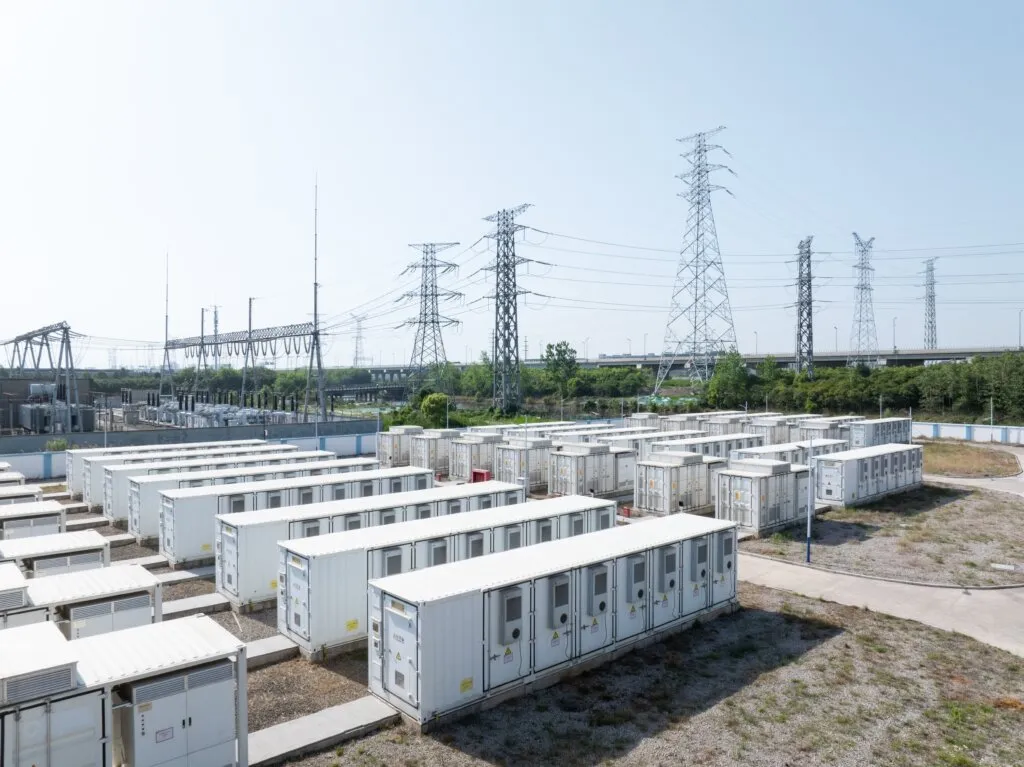
Utilities are increasingly recognizing the strategic value of siting distributed generation directly at substations, a shift that could reshape how they manage capacity, resilience, and market participation. This approach, championed by companies like Mesa Power Solutions, offers a multifaceted solution to some of the sector’s most pressing challenges.
“For decades, utilities have deployed distributed generation along distribution circuits primarily for single-circuit capacity support and voltage regulation,” says Tom Poteet, Senior VP Corporate Development at Mesa Power Solutions. “While these applications remain valuable, a broader opportunity is emerging: siting generators directly at substations to unlock system-level benefits that extend far beyond any single feeder.”
The advantages of this approach are manifold. First, substation-sited generators can meet system peak capacity requirements. Utilities often face challenges in meeting peak demand, which can lead to costly emergency purchases or reliability concerns. By installing generators at substations, utilities can add peaking capacity precisely where it enters the distribution system. “A key advantage of this approach is fuel flexibility,” Poteet explains. “While natural gas provides economical operation for extended run times, propane stored on-site eliminates dependence on pipeline infrastructure for peaking applications.”
Second, these generators enhance emergency resilience during transmission outages. Transmission system reliability is never guaranteed, and outages can leave entire distribution networks without supply. Substation-sited generators can be activated to energize distribution circuits and maintain service to customers during such outages. “This emergency resilience capability transforms the substation from a passive delivery point into an active resource that can island and sustain local load,” Poteet notes.
Third, substation-sited generation can mitigate the impacts of rolling blackouts. Regional transmission organizations occasionally mandate rolling blackouts to balance supply and demand during system emergencies. Utilities can activate their generators to cover the required load reduction, maintaining service to customers who would otherwise experience interruption. “This capability is particularly valuable for municipal systems and cooperatives where customer satisfaction and community relations are paramount,” Poteet says.
Fourth, generators at substations can participate in regional power markets. For substations interconnected within organized regional markets, on-site generation opens opportunities for economic dispatch and market participation. Generators can be offered into energy markets during periods of high prices, generating revenue that offsets capital and operating costs. “This market participation transforms substation generation from a pure cost center into a potential revenue stream,” Poteet explains.
Lastly, portable generation configurations offer an additional dimension of flexibility. Portable generators can be relocated to serve critical loads along disrupted distribution circuits. “The same assets that provide system-level benefits during normal operations become front-line restoration tools during emergencies,” Poteet notes.
This shift towards substation-sited generation could significantly impact the energy sector. It encourages utilities to think more strategically about distributed resources, potentially leading to more resilient and flexible grids. Moreover, it opens up new revenue streams and improves customer satisfaction, which are critical in an increasingly competitive and complex operating environment.
Mesa Power Solutions supports utilities throughout the implementation process, from arranging fuel supply and storage to collaborating with substation engineers on interconnection requirements. “Substation-sited generation represents an evolution in how utilities think about distributed resources,” Poteet concludes. “The opportunity to address capacity needs, enhance resilience, avoid blackout impacts, participate in markets, and respond to emergencies—potentially from a single installation—merits serious consideration as utilities navigate an increasingly complex operating environment.”