
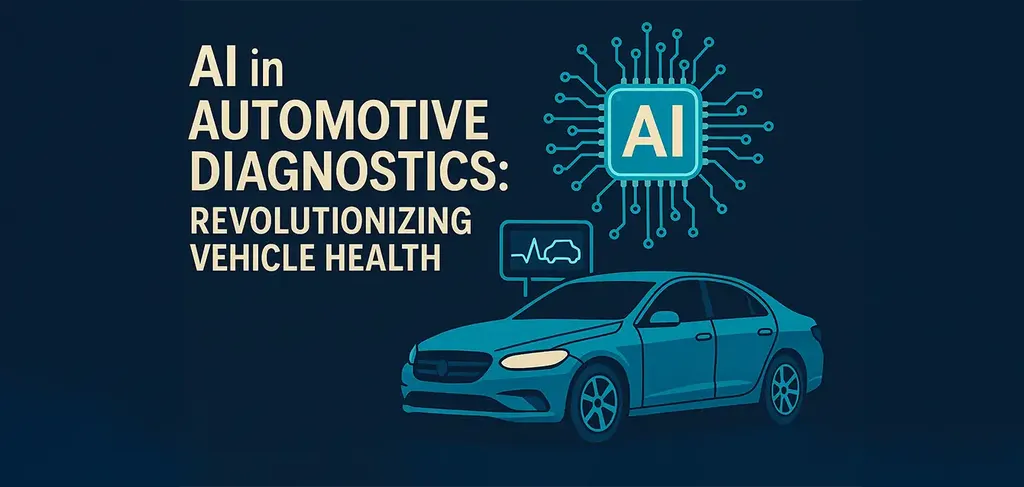
In the realm of automotive diagnostics, two researchers from the University of Augsburg, Hugo Math and Rainer Lienhart, have developed a novel approach to predict vehicle malfunctions more accurately. Their work, published in the journal IEEE Transactions on Intelligent Transportation Systems, focuses on integrating multiple data sources to improve diagnostic systems.
Currently, vehicle diagnostic systems primarily rely on sequences of Diagnostic Trouble Codes (DTCs) from On-Board Diagnostic (OBD) systems. However, these systems often overlook valuable contextual information such as raw sensory data like temperature, humidity, and pressure. This additional data is crucial for experts to classify vehicle failures but presents challenges due to its complexity and the noisy nature of real-world data.
Math and Lienhart’s solution is a model called BiCarFormer, which is the first multimodal approach to multi-label sequence classification of error codes into error patterns. It integrates DTC sequences with environmental conditions using a bidirectional Transformer model. This model is specifically designed for vehicle event sequences and employs embedding fusions and a co-attention mechanism to capture the relationships between diagnostic codes and environmental data.
The researchers tested BiCarFormer on a real-world automotive dataset containing 22,137 error codes and 360 error patterns. The results showed that their approach significantly improves classification performance compared to models that rely solely on DTC sequences and traditional sequence models.
For the energy industry, particularly the automotive sector, this research offers practical applications. By incorporating contextual environmental information, vehicle diagnostics can become more accurate and robust. This can lead to reduced maintenance costs and enhanced automation processes. Additionally, better diagnostics can contribute to improved vehicle safety and efficiency, which are key goals in the transition to sustainable and smart transportation systems.
In summary, Math and Lienhart’s work highlights the importance of a multimodal approach in vehicle diagnostics, paving the way for more efficient and effective maintenance strategies in the automotive industry.
This article is based on research available at arXiv.