
In the realm of nuclear energy, data is often scarce and imperfect, posing challenges for traditional machine learning methods that rely heavily on large datasets. A team of researchers from the University of Science and Technology of China, led by Jiaming Liu and including Yang Su, N. C. Shu, Y. J. Chen, and J. C. Pei, has developed a novel approach to address this issue. Their work, titled “Physics Informed Bayesian Machine Learning of Sparse and Imperfect Nuclear Data,” was recently published in the journal Nature Communications.
The researchers have integrated physics-based models into Bayesian machine learning to evaluate the energy dependence of independent fission product yields. These yields are critical for advanced nuclear energy applications but are often poorly understood due to limited experimental data. The team’s approach involves using a physics-model informed prior, which is essentially the posterior distribution obtained from learning data generated by fission models. This informative prior is then used to guide the Bayesian machine learning process.
Furthermore, the researchers incorporated cumulative fission yields as a physical constraint through a conversion matrix. This augmentation provides additional energy dependence information, enhancing the accuracy of the model’s predictions. By doing so, the team has demonstrated a truly Bayesian machine learning approach that leverages comprehensive physics knowledge to make the most of sparse but valuable nuclear data.
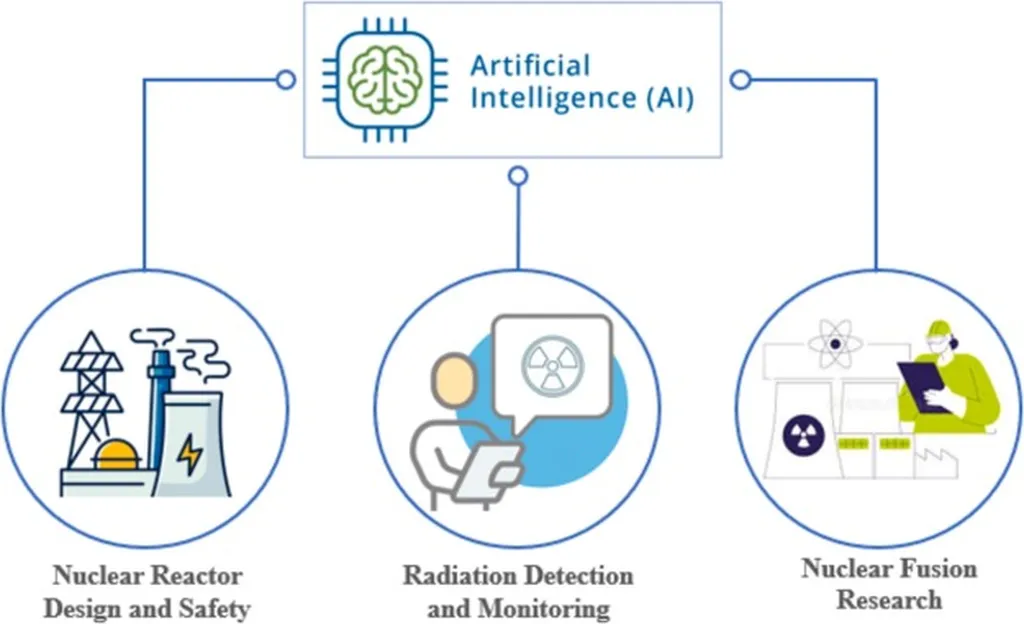
The practical applications of this research for the energy sector are significant. Accurate prediction of fission product yields is essential for the design and safety analysis of nuclear reactors. It also plays a crucial role in the development of advanced nuclear fuels and the management of nuclear waste. By improving the accuracy of these predictions, the researchers’ method could contribute to the advancement of nuclear energy technologies and the optimization of nuclear energy systems.
In summary, the team from the University of Science and Technology of China has developed a physics-informed Bayesian machine learning approach that effectively utilizes sparse and imperfect nuclear data. This method holds promise for enhancing the accuracy of fission product yield predictions, thereby supporting the development and optimization of nuclear energy technologies. The research was published in Nature Communications, a highly respected journal in the field of scientific research.
This article is based on research available at arXiv.