
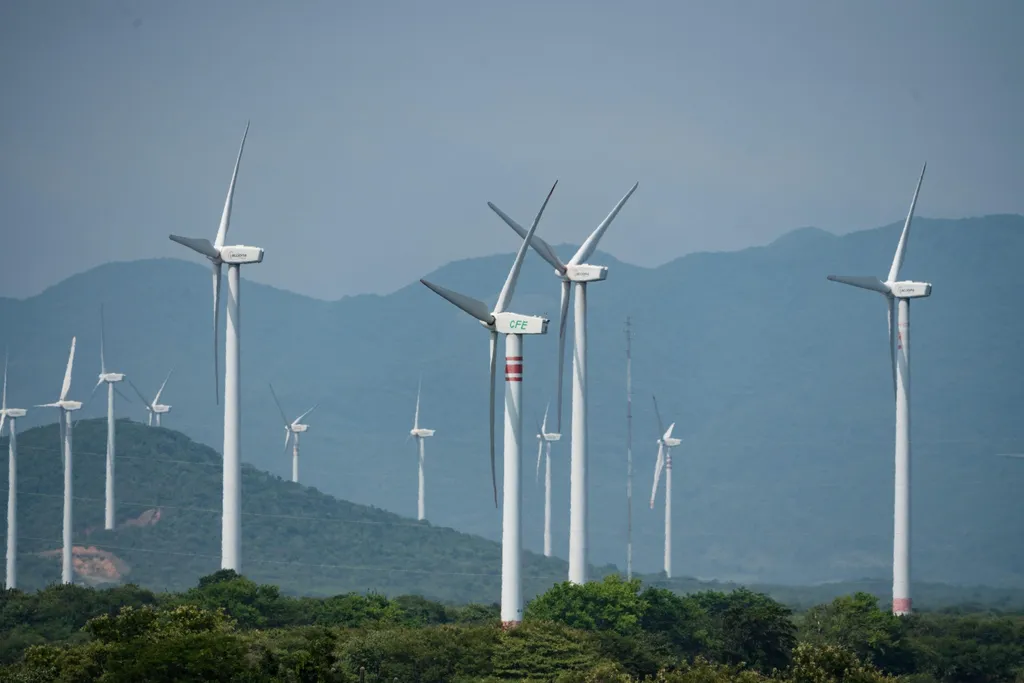
President Claudia Sheinbaum’s recent engagement with Mexico’s banking sector and the Comisión Federal de Electricidad’s (CFE) formalisation of a new regulatory framework signal a strategic pivot in Mexico’s energy policy. This coordinated approach aims to mobilise private capital for renewable energy and grid infrastructure projects, addressing critical bottlenecks and fostering a cleaner, more reliable electricity system.
The president’s meeting with leading banks, including BBVA, Banamex, and HSBC, underscores the government’s intent to leverage the domestic financial system as a catalyst for energy transition. By requesting tailored financing schemes for upcoming projects, Sheinbaum is sending a clear message: the financial sector must play an active role in supporting major infrastructure and energy initiatives. This political engagement, coupled with the formal launch of mixed development schemes, marks a significant shift in Mexico’s energy landscape.
The new regulatory framework, published in the Official Gazette, enables public-private partnerships for electricity generation, related infrastructure, and energy storage. The guidelines establish three award mechanisms—public tender, restricted invitation, and direct award—each with specific technical and financial procedures. This structured approach ensures competitive processes that improve conditions for the state and CFE without compromising technical specifications.
Under these mixed contracts, private partners will share costs, investment, and risk, provided projects meet sustainability and profitability criteria. The economic model must align with international project finance practices, including discounted cash flow analysis and internal rates of return (IRR). A Mixed Development Group (GDM), comprising representatives from CFE, the Ministry of Energy (SENER), and the Ministry of Finance, will assess each project’s viability, ensuring compliance with operational, financial, and socio-environmental standards.
This dual strategy—political engagement and regulatory reform—positions Mexico to attract significant private investment in green infrastructure. The government argues that expanding renewable energy, energy storage, and grid reinforcement can drive investment and long-term structural modernisation, even amid economic challenges such as slower growth and trade tensions.
The implications for markets are profound. By integrating private capital under clear rules and stringent technical criteria, CFE’s mixed contracts emerge as a new vehicle to accelerate the deployment of strategic assets for Mexico’s clean energy transition. The recent success of the first private-sector call for proposals, which awarded over 3.32 GW of renewable capacity and 1.49 GW of battery systems, reflects renewed international interest in the Mexican market. This trend is likely to continue, as the new framework provides a structured, transparent, and competitive process for investment.
Moreover, the government’s focus on reliability, safety, accessibility, and sustainability aligns with global best practices, enhancing Mexico’s appeal to international investors. The requirement for developers to submit maintenance and technology upgrade plans, as well as quarterly performance reports, ensures long-term operational excellence and investor confidence.
In conclusion, Mexico’s energy policy is undergoing a transformative shift, driven by political engagement and regulatory innovation. By mobilising private capital and fostering public-private partnerships, the government is positioning the country as a leader in the clean energy transition. This strategic pivot is poised to shape the development of the sector, attracting investment, driving innovation, and ensuring a more reliable and sustainable electricity system for Mexico.