
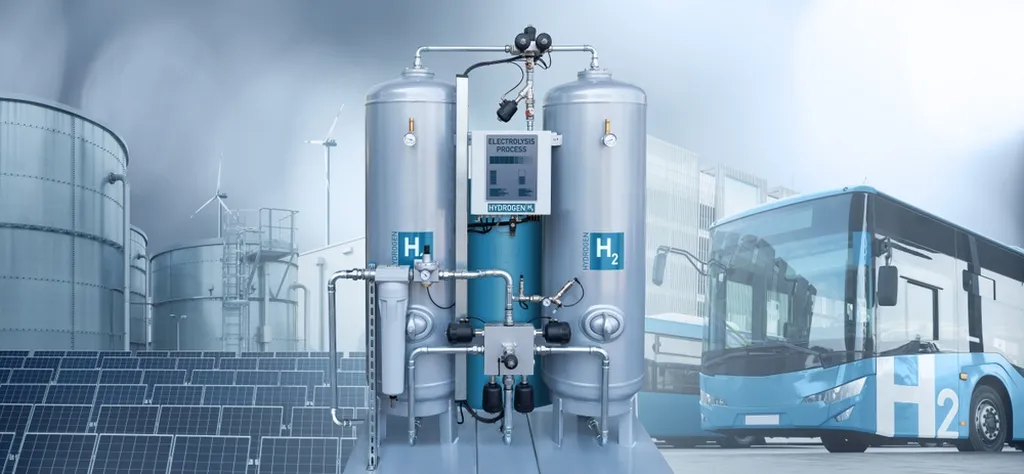
In a significant stride toward Germany’s hydrogen ambitions, the city of Chemnitz is set to bolster its position as a hub for green hydrogen innovation. The local energy supplier, Eins Energie, has secured approximately €1.6 million in funding to construct a hydrogen electrolyser and retrofit existing natural gas pipelines for green hydrogen use. This initiative is part of a broader effort to establish Chemnitz as one of four national hydrogen centres, a project that commenced operations last year.
State Secretary Sören Trillenberg underscored the project’s importance, stating, “The project is making an important contribution to strengthening Chemnitz as a research location and to the development of a hydrogen-based industry in Saxony.” The funding, derived from the European Union’s Just Transition Fund (JTF), aims to facilitate the transition to a climate-neutral economy.
Eins Energie’s plans include the construction of a 240-kilowatt electrolyser, capable of producing green hydrogen from renewable energy sources. A downstream stationary hydrogen storage unit will store around 115 cubic metres of the energy carrier. This electrolyser is expected to supply green hydrogen to the Chemnitz technology campus until the 2030s, with potential for future expansion.
Chemnitz’s role as one of four locations for the German Government’s National Hydrogen Innovation and Technology Center (ITZ) is pivotal. The city’s technology campus will see the construction of a new building in several phases by 2029. The ITZ focuses on supporting small and medium-sized enterprises and start-ups in developing new business areas for green hydrogen technologies. Laboratories, test benches, and workshops are being established to accelerate the development of new technologies and products to market maturity.
The broader context of this development includes the phasing out of coal use in Saxony. The Saxon lignite regions will receive a total of €645 million in EU funding for structural change until 2027. The majority of this funding will go to the Lusatian coalfield, with €200 million allocated to the Central German mining district and €70 million earmarked for the city of Chemnitz.
This initiative not only underscores Germany’s commitment to green hydrogen but also highlights the strategic importance of regional hubs in driving innovation and economic transformation. As Chemnitz positions itself at the forefront of hydrogen technology, the ripple effects could extend across the energy sector, influencing policy, investment, and technological advancements nationwide. The success of this project may well serve as a blueprint for other regions seeking to transition towards a sustainable, hydrogen-powered future.