
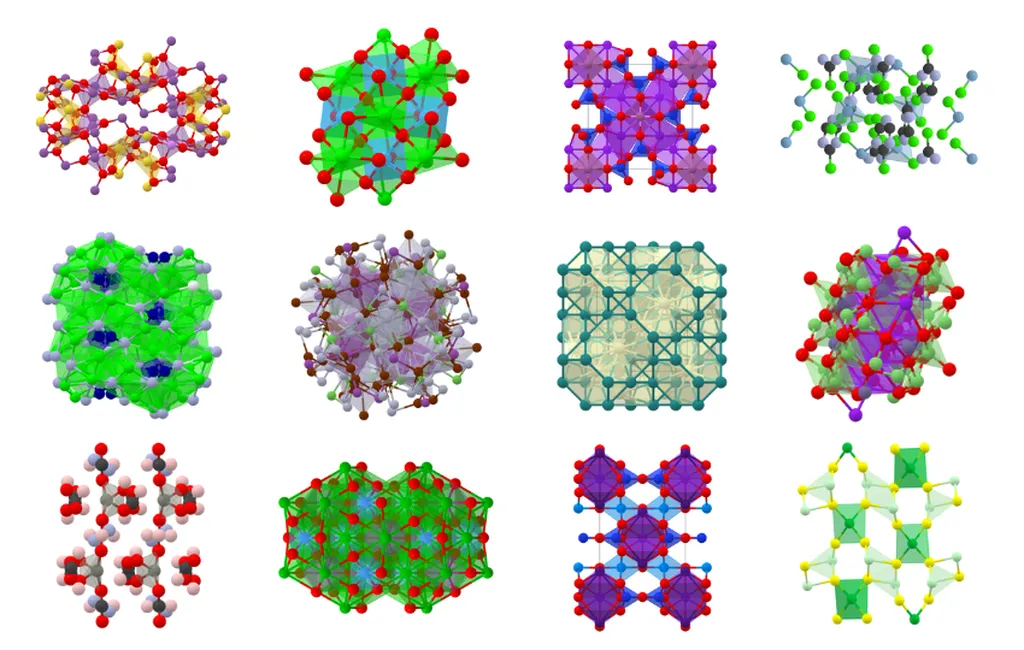
Researchers from the University of California, Berkeley, including Xiyuan Liu, Christian Hacker, Shengnian Wang, and Yuhua Duan, have developed a new machine learning approach to accelerate the discovery of materials for hydrogen storage. Their work, published in the journal Nature Communications, focuses on metal hydrides, which are crucial for efficient hydrogen storage in carbon-neutral energy systems.
The team’s research addresses a significant challenge in the field: the limited number of well-characterized metal hydrides in existing materials databases. These databases, such as the Materials Project, are essential for identifying optimal candidates for hydrogen storage, but their limited scope can slow down the discovery process. To overcome this, the researchers integrated causal discovery with a lightweight generative machine learning model. This framework can generate novel metal hydride candidates that may not exist in current databases.
Using a dataset of 450 samples, the model generated 1,000 potential candidates. After ranking and filtering these candidates, the researchers identified six previously unreported chemical formulas and crystal structures. Four of these were validated using density functional theory simulations, demonstrating strong potential for future experimental investigation. This approach not only expands the existing hydrogen storage datasets but also provides a scalable and time-efficient method for materials discovery.
The practical applications of this research for the energy sector are significant. Efficient hydrogen storage is a key component in the transition to carbon-neutral energy systems. By accelerating the discovery of optimal metal hydrides, this research could help advance hydrogen storage technologies, making them more viable for large-scale energy applications. The scalability of the proposed framework also means it could be applied to other materials discovery challenges in the energy sector, further supporting the development of sustainable energy solutions.
This article is based on research available at arXiv.