
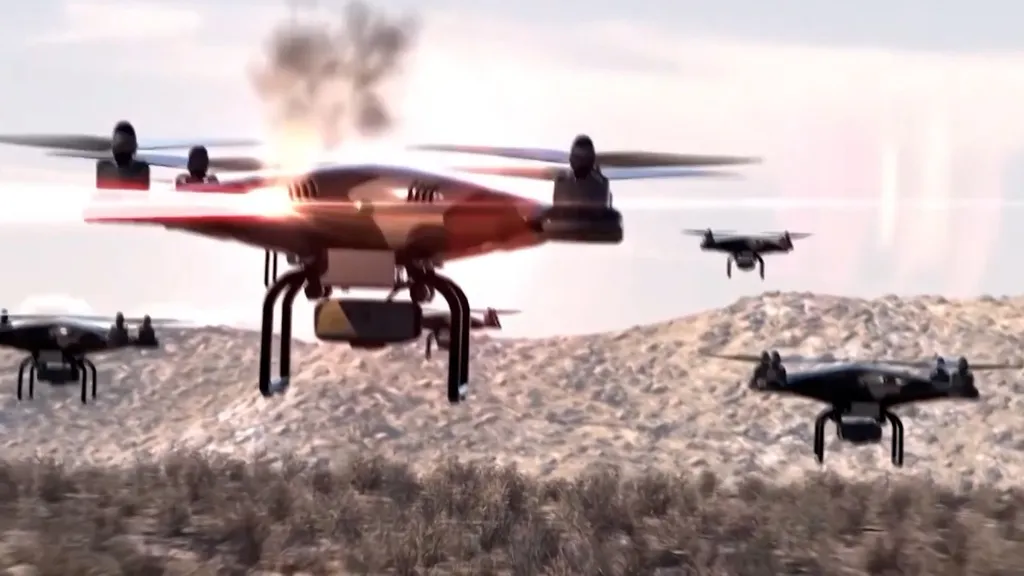
Dr. Chuan-Chi Lai, a researcher at the National Chiao Tung University in Taiwan, has developed a novel approach to improve the coordination of mobile edge networks using unmanned aerial vehicles (UAVs). The research, published in the journal IEEE Transactions on Mobile Computing, addresses the challenge of maintaining robust service in highly dynamic environments, such as transitioning from dense urban areas to sparse rural regions.
The study focuses on the issue of catastrophic forgetting in conventional Deep Reinforcement Learning (DRL) approaches, which often require computationally expensive retraining or model resets when adapting to new user distributions. To overcome this limitation, Dr. Lai proposes a Spatiotemporal Continual Learning (STCL) framework that utilizes a Group-Decoupled Multi-Agent Proximal Policy Optimization (G-MAPPO) algorithm. This approach integrates a novel Group-Decoupled Policy Optimization (GDPO) mechanism that employs dynamic z-score normalization to balance heterogeneous objectives, including energy efficiency, user fairness, and coverage. The framework also leverages the 3D mobility of UAVs as a spatial compensation layer, allowing the swarm to autonomously adjust altitudes to accommodate extreme density fluctuations.
The research demonstrates that the proposed STCL framework achieves superior resilience, with an elastic recovery of service reliability to approximately 0.95 during phase transitions. Compared to the Multi-Agent Deep Deterministic Policy Gradient (MADDPG) baseline, G-MAPPO not only prevents knowledge forgetting but also delivers an effective capacity gain of 20% under extreme traffic loads. This highlights the potential of the framework as a scalable solution for edge-enabled aerial swarms in the energy sector.
The practical applications of this research for the energy industry include improved coordination and efficiency of UAV networks used for monitoring and maintaining energy infrastructure, such as power lines and wind turbines. The ability to adapt to changing environments and user distributions without the need for retraining or model resets can lead to more reliable and cost-effective energy services. Additionally, the focus on energy efficiency and user fairness can contribute to the development of more sustainable and equitable energy solutions.
In summary, Dr. Lai’s research presents a promising approach to enhance the coordination of mobile edge UAV networks, with significant implications for the energy industry. The proposed STCL framework offers a scalable and efficient solution for maintaining robust service in dynamic environments, paving the way for more reliable and sustainable energy services.
This article is based on research available at arXiv.