
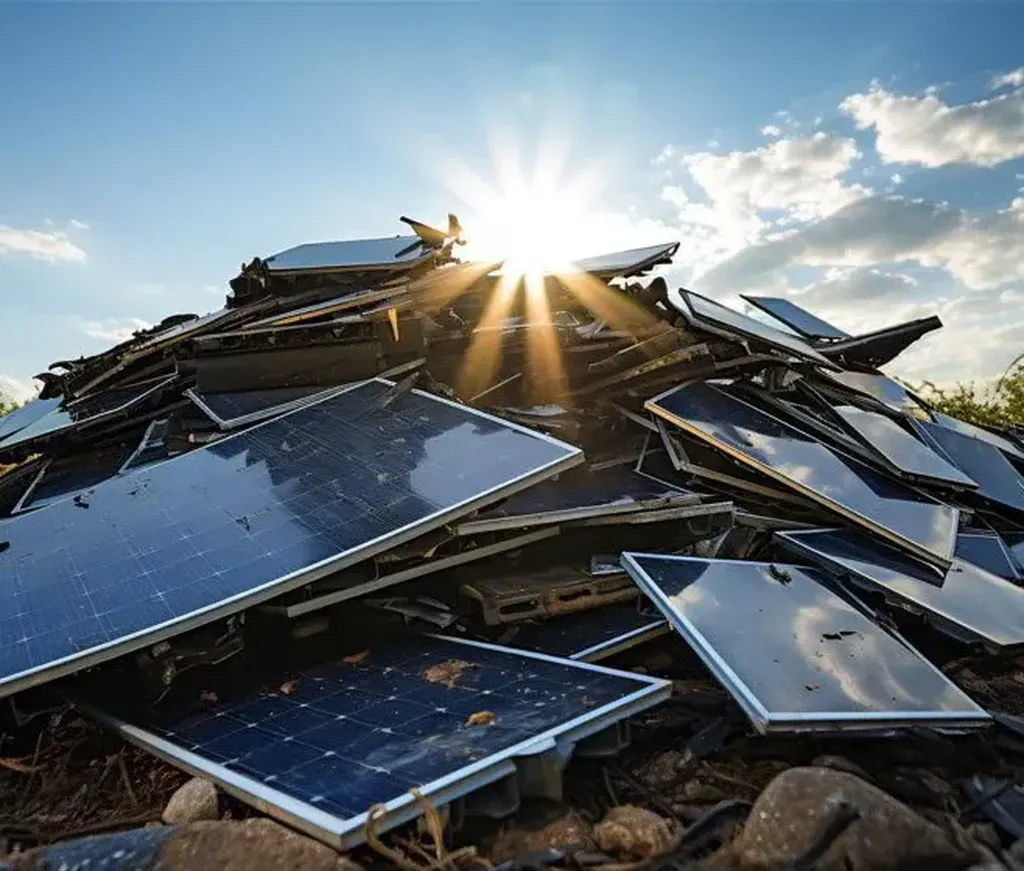
A breakthrough unveiled at CES 2026 is set to transform the sustainability of solar energy: SolreBorn’s mobile, on-site solar panel recycling unit. By processing end-of-life panels directly at solar farms, the technology slashes transportation emissions and costs by 85%, turning what was once a logistical and environmental burden into a closed-loop, circular economy model. This innovation ensures that large-scale renewable deployments remain sustainable not just in operation, but throughout their entire lifecycle—a critical step as global solar capacity surges toward 2026 targets.
Traditionally, solar panel recycling has been hampered by high logistics costs and energy-intensive processes. Most decommissioned panels are transported to centralized facilities, often hundreds of miles away, resulting in significant carbon emissions and economic inefficiencies. SolreBorn’s mobile unit addresses these challenges head-on by deploying compact, automated recycling systems that extract and purify silicon, glass, and metals on-site. The process recovers up to 95% of materials, including silver and copper, which can be directly reused in new panel production or sold back into the supply chain. This not only reduces waste but also lowers the embodied energy of new solar installations, a key metric for true sustainability.
“By eliminating the need for long-haul transport and leveraging real-time material recovery, we’re not just recycling—we’re reinventing the economics of solar sustainability,” said a SolreBorn spokesperson at CES 2026. “This is about making renewables truly renewable, from cradle to cradle.” The technology’s modular design allows for rapid deployment at utility-scale solar farms, making it scalable across diverse geographies and project sizes.
The implications for the energy sector are profound. As solar capacity expands—with global installations expected to exceed 1,000 GW by 2030—the industry faces mounting pressure to address end-of-life management and resource circularity. SolreBorn’s approach not only mitigates environmental impact but also enhances the economic viability of solar projects by reducing disposal costs and creating new revenue streams from recovered materials. For policymakers, this innovation underscores the need for regulations that incentivize circular practices and penalize linear waste models. Industry adoption could accelerate if integrated with extended producer responsibility (EPR) frameworks, further aligning solar energy with the principles of a net-zero future.
For engineers and project developers, the technology offers a blueprint for embedding sustainability into the DNA of renewable infrastructure. By closing the material loop, SolreBorn’s mobile recycling unit doesn’t just solve a problem—it redefines what it means to build a truly sustainable energy system.