
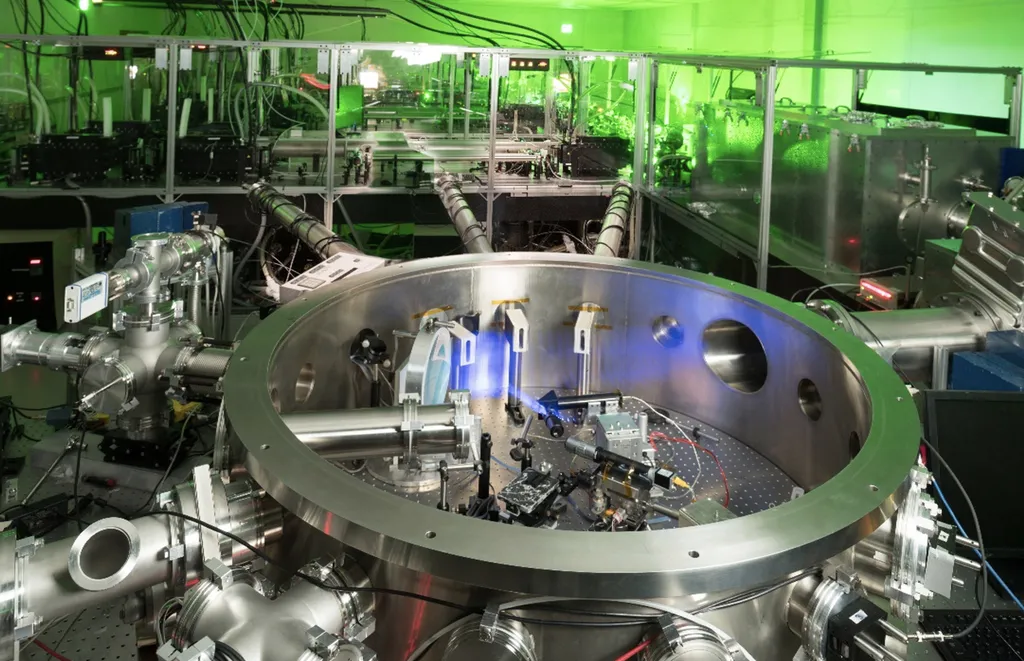
Marvel Fusion, a startup founded in 2019, is making strides in the field of laser-based inertial fusion energy (IFE), aiming to deliver reliable, clean energy without the long-lived radioactive waste associated with nuclear fission. The company’s innovative approach combines advances in laser technology, fuels, and fast-ignition concepts, potentially reshaping the energy sector’s landscape.
At the heart of Marvel Fusion’s work is the development of advanced fast-ignition concepts, which could lead to novel target designs or be integrated into existing ones. The company is also focusing on developing advanced ultra-broadband, diode-pumped solid-state lasers (DPSSLs) and beyond, which can operate in both ultra-short and long-pulse regimes at high repetition rates, high pulse energy, high efficiency, and low cost. These lasers could serve as versatile IFE drivers across a wide range of applications.
One of the key parameters in laser-based IFE is the target gain (QT), defined as the ratio of fusion energy to the laser energy deposited in the target. Marvel Fusion is exploring ways to optimize the target gain by improving the efficiency of laser energy conversion, hydrodynamic processes, and fusion-energy production. The company is investigating both volume ignition and hotspot ignition strategies, with the latter offering enhanced target gains due to better control of relevant parameters.
In the pursuit of commercially viable fusion energy, Marvel Fusion is also pioneering work on advanced cryogenic fuels with controlled contaminants and non-cryogenic fuel systems. These fuels could offer potential advantages for commercial fusion energy, such as easier handling and storage. The company is investigating non-cryogenic DT compounds, which could be volume ignited under ideal conditions, albeit with more demanding parameters than DT ice.
A core element of Marvel Fusion’s fast igniter is the use of nanorods. By tuning their lengths, thicknesses, and pitches, these nanorods can be optimized for maximum laser energy absorption and conversion into new useful energy carriers. Experiments have shown that these nanowires can convert nearly the entire incident laser energy into secondary energy carriers suitable for efficient fuel heating on sub-ps timescales.
Marvel Fusion’s work could significantly impact the energy sector’s development. Fusion power plants have the potential to deliver reliable baseload electricity, supporting rising global energy demand while avoiding the emission of climate-relevant gases. Unlike fluctuating renewable sources, fusion power could contribute a substantial share to the grid without the need for large-scale energy storage. Moreover, fusion energy does not produce long-lived radioactive waste, and its fuels are abundant and broadly accessible.
As Marvel Fusion continues to advance its technologies, it could help accelerate the commercialization of fusion energy, bringing us closer to a future powered by clean, reliable, and abundant energy. The company’s innovative approach and focus on key challenges in the field make it a notable player in the global effort to harness the power of fusion.