
Researchers Domenico Ciuonzo, Alessio Zappone, Marco Di Renzo, and Ciro D’Elia, affiliated with the Laboratory of Signals and Systems (L2S) at CentraleSupélec, Université Paris-Saclay, have published a study on enhancing distributed detection in wireless sensor networks (WSNs). Their work, titled “Holographic & Channel-Aware Distributed Detection of a Non-cooperative Target,” was published in the IEEE Transactions on Signal Processing.
In the energy sector, wireless sensor networks are increasingly used for monitoring and managing various aspects of energy infrastructure, such as smart grids, renewable energy systems, and energy storage. Efficient and reliable detection of localized phenomena within these networks is crucial for maintaining optimal performance and safety.
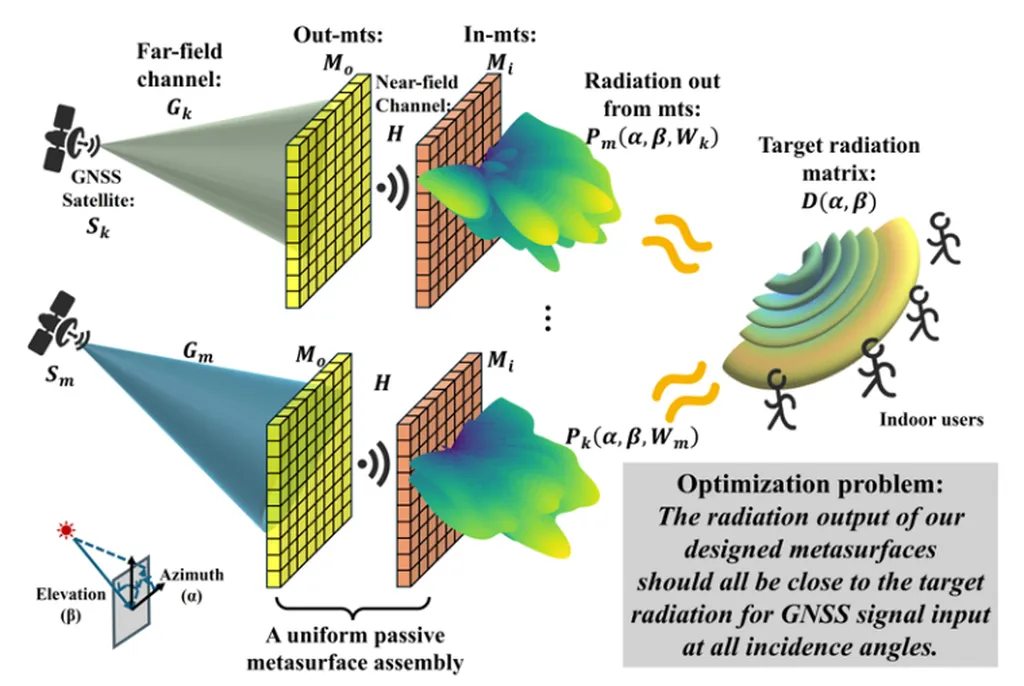
The researchers investigated distributed detection (DD) in WSNs, where sensors are spatially distributed and transmit binary decisions over a shared communication channel. To improve the efficiency of data fusion—the process of combining data from multiple sensors—they proposed a novel approach using a reconfigurable metasurface. This metasurface is positioned near a few receive antennas, creating a holographic architecture that leverages large-aperture gains with minimal radio frequency (RF) hardware.
The study derived a generalized likelihood ratio test for fixed metasurface settings and proposed two low-complexity joint design strategies to optimize both fusion and metasurface configuration. These strategies aim to balance performance, complexity, and system knowledge, ensuring reliable detection of localized phenomena at the fusion center while adhering to energy-efficient constraints suitable for Internet of Things (IoT) applications.
Simulation results validated the effectiveness of the proposed holographic fusion, even under simplified designs. This research highlights the potential for improving the reliability and efficiency of data fusion in WSNs, which can be particularly beneficial for the energy sector. By enhancing the performance of distributed detection, energy companies can better monitor and manage their infrastructure, leading to improved safety, efficiency, and cost savings.
The research was published in the IEEE Transactions on Signal Processing, a reputable journal in the field of signal processing and its applications.
This article is based on research available at arXiv.