
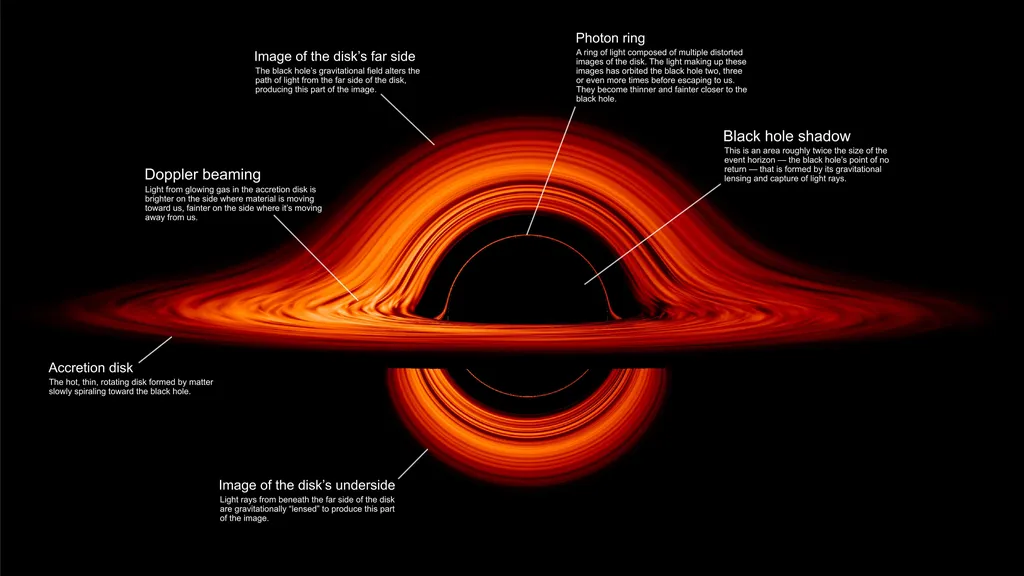
In the realm of theoretical physics and energy research, a trio of scientists—Erdem Sucu, Izzet Sakalli, and Emmanuel N. Saridakis—have delved into the intriguing properties of black holes that arise from specific extensions of standard electrovacuum gravity. These researchers, affiliated with various institutions including the University of Istanbul and the National and Kapodistrian University of Athens, have published their findings in a recent study that explores the unique characteristics and observational signatures of these celestial objects.
The study focuses on a static, spherically symmetric black hole that emerges from Einstein’s theory of gravity when coupled with a Kalb-Ramond field and ModMax nonlinear electrodynamics. Both of these extensions are well-motivated modifications to standard electrovacuum gravity. The black hole solution they investigate depends not only on mass and charge but also on a Lorentz-violating parameter, a ModMax deformation parameter, and a discrete branch selector denoted by ζ, which can take values of ±1. This branch selector gives rise to two distinct types of black holes: the ordinary branch and the phantom branch.
The researchers found that the ordinary branch can exist in both extremal and non-extremal configurations, meaning it can have either a single horizon or two horizons. In contrast, the phantom branch typically supports a single-horizon geometry. To understand the thermodynamic properties of these black holes, the team analyzed their behavior within the framework of Tsallis non-extensive thermodynamics. This analysis revealed that the stability and Joule-Thomson behavior of the black holes are dependent on which branch they belong to.
Beyond thermodynamic properties, the study also examined weak gravitational lensing, photon propagation in plasma, and tidal forces. These investigations uncovered clear optical and strong-field signatures that can distinguish between the ordinary and phantom branches. Notably, the ordinary branch exhibits a phenomenon known as finite-radius tidal inversion, which is absent in the phantom sector. This tidal inversion refers to a point within the black hole’s gravitational field where the tidal forces change direction, a feature that could have significant implications for understanding the extreme environments around black holes.
The combined effects of the Kalb-Ramond field and ModMax electrodynamics lead to a rich and observationally distinguishable phenomenology of black holes. The findings of this study, published in the journal Physical Review D, highlight the potential for future observations to distinguish between different types of black holes and to probe the fundamental physics governing these enigmatic objects. While the direct practical applications to the energy sector may not be immediately apparent, the deeper understanding of black hole physics could indirectly influence theoretical models and technologies related to energy generation and space exploration.
In summary, this research provides a detailed exploration of the unique properties and observational signatures of black holes arising from specific extensions of standard electrovacuum gravity. The findings offer valuable insights into the behavior of these celestial objects and could pave the way for future advancements in both theoretical physics and applied energy research.
This article is based on research available at arXiv.