
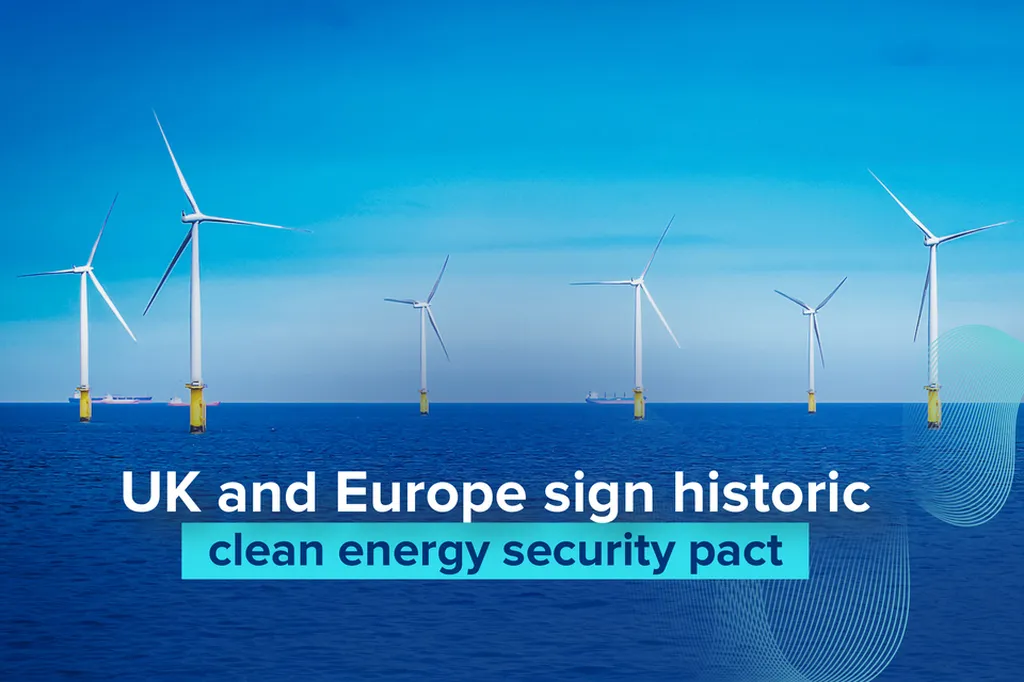
UK Energy Secretary Ed Miliband has inked a landmark clean energy security pact, the Hamburg Declaration, with European allies to fortify energy security for families and businesses across the UK and Europe. This agreement, signed amid global instability, aims to accelerate a fleet of joint offshore wind projects involving Germany, Norway, France, and Denmark, leveraging Europe’s abundant North Sea energy resources.
Miliband emphasized the strategic importance of this move, stating, “We are standing up for our national interest by driving for clean energy, which can get the UK off the fossil fuel rollercoaster and give us energy sovereignty and abundance.” This commitment to clean, secure energy comes on the heels of the UK’s record-breaking offshore wind auction, which secured 7,000 jobs and attracted £22bn in private-sector investment.
The Hamburg Declaration builds on a 2021 pledge by North Sea countries to construct 300 GW of offshore wind by 2050, a response to Russia’s invasion of Ukraine and the weaponization of Europe’s energy supplies. For the first time, North Sea countries have agreed to deliver 100 GW of this offshore wind power through collaborative clean energy projects. These projects will include innovative ‘offshore wind hybrid assets’—wind farms at sea directly connected to multiple countries via interconnectors.
At the Future of the North Seas Summit in Hamburg, Miliband met with European leaders to advance plans to transform the North Sea into the world’s largest ‘clean energy reservoir.’ The summit brought together leaders from Germany, France, Belgium, Iceland, Ireland, the Netherlands, Luxembourg, Denmark, and Norway.
Interconnectors are pivotal for Europe’s energy security, enabling the transmission of clean power to where it’s needed most and reducing reliance on volatile fossil fuel markets. Ben Wilson, President of National Grid Ventures, highlighted the importance of collaboration, stating, “Today is a step towards a more integrated energy system in the North Seas. Collaboration is key to delivering on more secure, affordable energy for British and European consumers.”
Key outcomes from the summit include a statement of intent signed by the UK, Germany, Belgium, Denmark, and the Netherlands to unlock cross-border offshore electricity projects. This focuses on joint planning, cost-sharing, and market arrangements to expedite delivery. Additionally, the UK and Germany agreed to deepen collaboration on offshore hybrid assets, advanced subsea energy infrastructure that combines offshore wind farm connections with electricity interconnectors.
William Bain, Head of Trade Policy at the British Chambers of Commerce, underscored the economic and energy security benefits of closer cooperation with European allies. He noted that the commitments in the Hamburg Declaration will enable UK businesses to participate in joint projects on renewables, interconnectors, and other vital energy infrastructure.
This pact could significantly reshape Europe’s energy landscape, accelerating the transition to renewable energy and enhancing energy security. By fostering collaboration and innovation, the Hamburg Declaration may set a new standard for international energy cooperation, potentially influencing similar agreements worldwide. The focus on interconnectors and hybrid assets could also drive technological advancements and create new economic opportunities, further solidifying Europe’s leadership in the clean energy transition.