
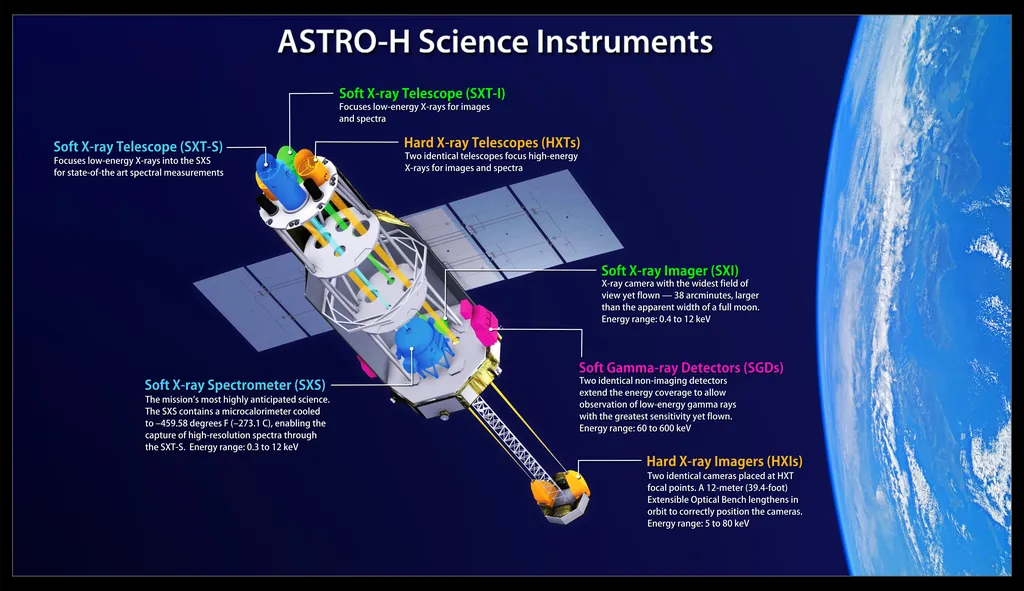
In the realm of energy and space exploration, a team of researchers from various institutions, including Kyoto University, Osaka University, and the Japan Aerospace Exploration Agency, has made significant strides in developing advanced X-ray optics. Their work, published in the journal “Optics Express,” focuses on creating X-ray telescope mirrors using an innovative electroforming replication technique.
The researchers initially honed their technique through the fabrication of ultra-short-focal-length nanofocusing mirrors for synchrotron X-ray microscopy. This method was then applied to develop a 60-mm-diameter, full-circumference, double-reflection monolithic electroformed nickel mirror and its Mirror Module Assembly (MMA). The experiments were conducted at the 1-km beamline BL29XUL at SPring-8, a large-scale synchrotron radiation facility in Japan.
To simulate a parallel X-ray beam from celestial sources, the team constructed a dedicated evaluation system called the High-Brilliance X-ray Kilometer-long Large-Area Expanded-beam Evaluation System (HBX-KLAEES). This system allowed for high-fidelity evaluation of the imaging performance of the MMA. The results were impressive, showing an extremely sharp core with a Full Width at Half Maximum (FWHM) of 0.7 arcsec and a Half Power Diameter (HPD) of 14 arcsec, even after integration into the MMA.
The researchers also found a positive correlation between angular resolution and axial figure error in both the primary and secondary mirror sections. This indicates that axial figure errors contribute to image degradation. Based on these findings, the MMA was selected as one of the hard X-ray optics for the FOXSI-4 sounding rocket experiment. This experiment performs high-resolution soft and hard X-ray imaging spectroscopy of solar flares and was successfully launched.
The practical applications of this research for the energy sector are manifold. High-resolution X-ray optics can enhance the capabilities of synchrotron radiation facilities, which are crucial for materials science research. This includes the development of advanced materials for energy storage, conversion, and transmission. Additionally, the technology can be applied to small satellites, including CubeSats, enabling more precise and detailed observations of celestial phenomena. This can contribute to our understanding of solar activity and its impact on space weather, which in turn affects satellite operations and power grid stability on Earth.
In summary, the development of electroformed X-ray optics represents a significant advancement in the field of X-ray imaging. The research conducted by this team of scientists opens up new possibilities for both energy research and space exploration, highlighting the interconnectedness of these two critical areas.
This article is based on research available at arXiv.