
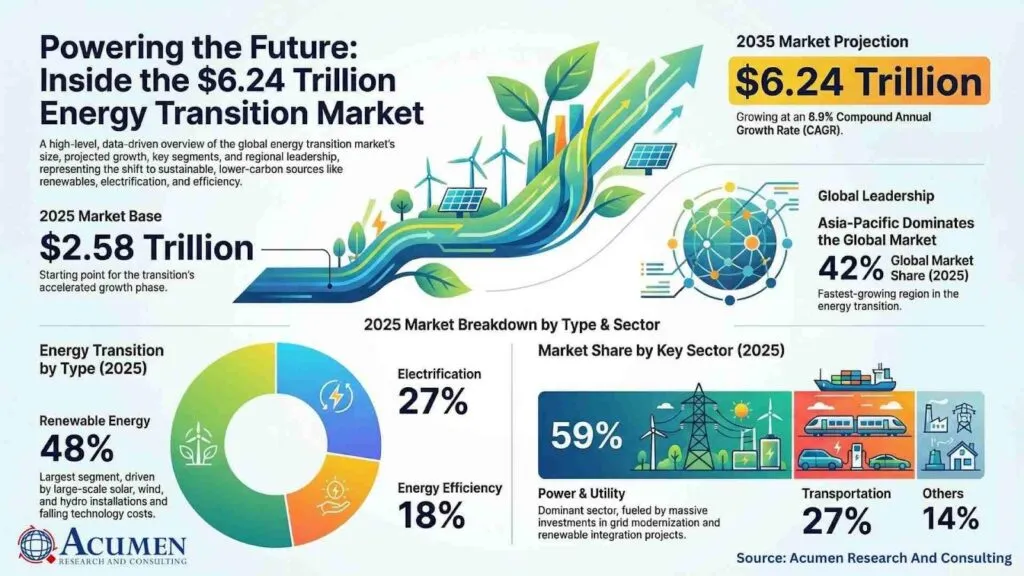
The global energy transition market is undergoing a seismic shift, with projections indicating a more than doubling in value from USD 2.58 trillion in 2025 to USD 6.24 trillion by 2035. This growth, driven by an 8.9% compound annual growth rate, is not merely a financial trend but a fundamental restructuring of how energy is generated, distributed, and consumed worldwide.
At the heart of this transformation is a concerted global push toward decarbonization. Governments are setting ambitious net-zero targets, spurred by international agreements like the Paris Agreement and COP28 commitments. These policies are creating a regulatory environment that favors renewable energy and sustainable infrastructure, driving significant investments in clean technologies.
The declining cost of renewable energy is another critical factor. Solar and wind power have become cheaper than fossil fuels in many regions, thanks to technological advancements. This cost competitiveness is making renewable energy the preferred choice for new power generation projects, further accelerating the transition away from fossil fuels.
Electrification is also playing a pivotal role. The rise of electric vehicles (EVs), electric heat pumps, and electrified industrial processes is increasing demand for renewable electricity and advanced grid systems. This shift is not only changing how energy is consumed but also necessitating the development of more robust and flexible energy infrastructure.
The energy transition market is not just about replacing one energy source with another; it’s about building a more resilient, decentralized, and efficient energy system. This includes the integration of renewable energy generation, energy storage systems, smart grids, and carbon capture technologies. The goal is to create an energy ecosystem that can meet future global demand while mitigating greenhouse gas emissions.
The implications for markets are profound. The energy transition is creating new investment opportunities and reshaping existing ones. Traditional energy companies are being forced to adapt or face obsolescence, while new players are emerging to capitalize on the shift toward clean energy. This dynamic is likely to intensify competition, drive innovation, and create new economic opportunities.
However, the energy transition also presents challenges. The need for significant infrastructure investments, the intermittency of renewable energy sources, and the complexities of integrating new technologies into existing systems are all hurdles that must be overcome. Moreover, the transition must be managed in a way that ensures energy security and affordability for all.
The energy transition market is at a critical juncture. The decisions made today will shape the future of energy for generations to come. As the market continues to evolve, it will be crucial for stakeholders to collaborate, innovate, and adapt to the changing energy landscape. The stakes are high, but the potential rewards—both for the planet and for the economy—are even higher.