
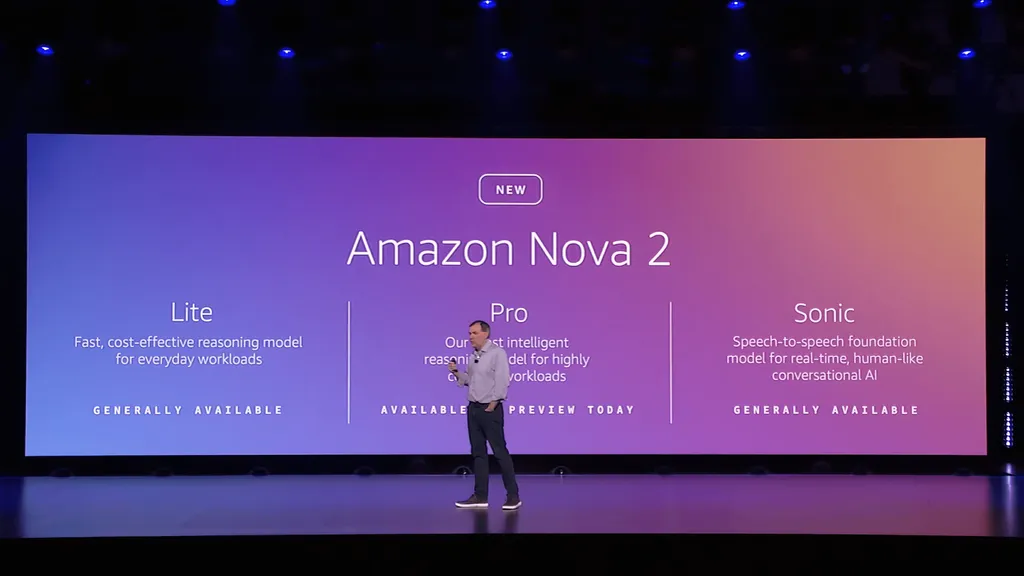
In the rapidly evolving landscape of artificial intelligence, Amazon’s latest endeavor, the Nova 2.0 Lite model, has been put under the microscope by a team of researchers from Amazon. The team, led by Satyapriya Krishna, Matteo Memelli, and Tong Wang, along with Abhinav Mohanty, Claire O’Brien Rajkumar, Payal Motwani, Rahul Gupta, and Spyros Matsoukas, has evaluated the model’s safety and capabilities under Amazon’s Frontier Model Safety Framework (FMSF). Their findings, presented in a recent report, offer valuable insights into the potential applications and risks of this advanced AI model, particularly in the energy sector.
The Nova 2.0 Lite model is part of the Nova 2.0 series and is notable for its ability to process and analyze large volumes of data, including text, images, and video, with a context length of up to 1 million tokens. This capability enables the model to handle complex tasks such as analyzing large codebases, extensive documents, and lengthy videos in a single prompt. The researchers focused their evaluation on three high-risk domains: Chemical, Biological, Radiological and Nuclear (CBRN), Offensive Cyber Operations, and Automated AI R&D. They employed a combination of automated benchmarks, expert red-teaming, and uplift studies to assess whether the model’s capabilities and risks met the criteria for safe release.
The comprehensive evaluation aimed to determine if Nova 2.0 Lite could be safely deployed in sensitive areas such as energy infrastructure, where the potential for misuse or unintended consequences is high. The researchers found that the model’s advanced reasoning capabilities could be harnessed for various applications in the energy sector, including predictive maintenance, grid management, and cybersecurity. For instance, the model’s ability to analyze large datasets could be used to predict equipment failures, optimize energy distribution, and detect cyber threats in real-time.
However, the evaluation also highlighted the need for robust safety measures to mitigate potential risks. The researchers emphasized the importance of continuous enhancement of safety evaluation and mitigation pipelines as new risks and capabilities associated with frontier models are identified. This ongoing process is crucial for ensuring that AI models like Nova 2.0 Lite are used responsibly and ethically in the energy sector and beyond.
The research was published as part of Amazon’s commitment to transparency and safety in AI development. The detailed evaluation and findings provide a valuable resource for energy companies looking to leverage advanced AI models while ensuring the safety and security of their operations. As the energy sector continues to embrace digital transformation, the insights from this research will be instrumental in guiding the responsible deployment of AI technologies.
In conclusion, the evaluation of Nova 2.0 Lite under Amazon’s Frontier Model Safety Framework offers a balanced perspective on the model’s capabilities and risks. The findings underscore the potential of advanced AI models in the energy sector while emphasizing the need for continuous safety assessments and mitigation strategies. As AI continues to evolve, such evaluations will be crucial in ensuring that these powerful tools are used to drive innovation and efficiency in the energy industry while minimizing potential risks.
This article is based on research available at arXiv.