
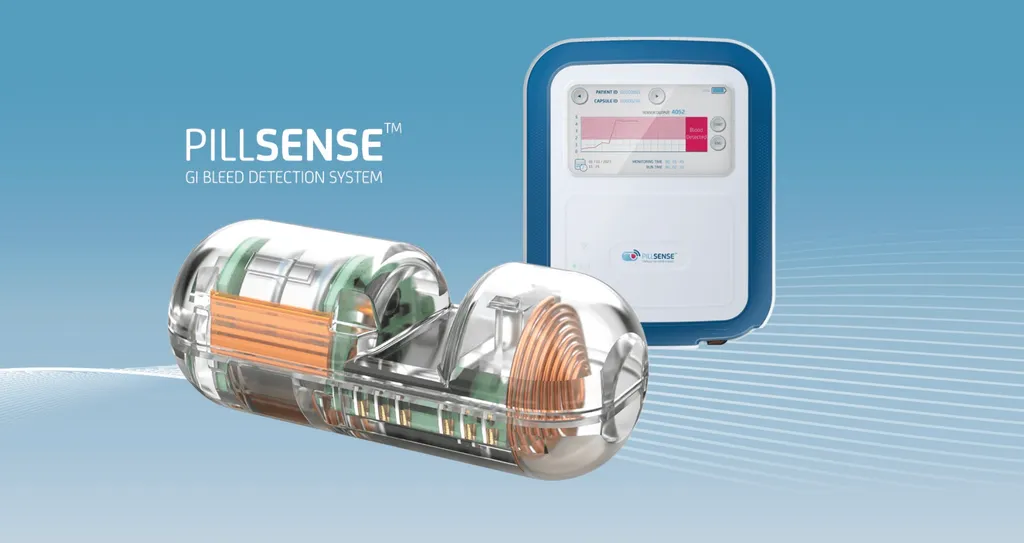
Researchers from the University of Science and Technology of China, led by Yunhao Bian and Hen-Wei Huang, have developed a novel wireless optical system that could significantly improve post-endoscopic monitoring of gastrointestinal (GI) bleeding. This innovative technology aims to provide more detailed and timely information to clinicians, potentially reducing morbidity and mortality rates associated with GI rebleeding.
The team has created a capsule-sized device equipped with multi-wavelength optical sensing capabilities. This system is designed to classify the severity of GI bleeding by measuring the flow rate of blood in real-time. The device uses transmission spectroscopy to capture time-resolved, multi-spectral measurements, which are then analyzed by a lightweight two-dimensional convolutional neural network (CNN) embedded within the capsule. This on-device artificial intelligence (AI) processing allows for immediate classification of bleeding flow rates, with an impressive accuracy of 98.75% in controlled in vitro experiments.
One of the key advantages of this system is its ability to distinguish between bleeding and other non-blood interferences within the GI tract. This capability is crucial for accurate diagnosis and timely clinical decision-making. The researchers validated the system’s performance under simulated gastric conditions, ensuring its robustness in real-world scenarios.
The device’s energy efficiency is another notable feature. By performing AI inference directly on the capsule electronics, the system reduces overall energy consumption by approximately 88% compared to continuous wireless transmission of raw data. This efficiency makes prolonged, battery-powered operation feasible, enabling continuous monitoring during the high-risk period following endoscopic hemostasis.
The practical applications of this technology for the energy sector are not immediately apparent, as the primary focus is on medical diagnostics. However, the underlying principles of energy-efficient, AI-driven data processing and wireless transmission could inspire innovations in remote monitoring and predictive maintenance systems for energy infrastructure. For instance, similar AI algorithms could be employed to analyze sensor data from power plants or renewable energy installations, identifying potential issues before they escalate into major problems.
The research was published in the journal Nature Communications, a reputable source for cutting-edge scientific findings. While the immediate impact of this technology is within the medical field, the advancements in AI and wireless sensing technologies demonstrated in this study could have broader implications for various industries, including energy. As the energy sector increasingly adopts digital technologies and data-driven approaches, innovations in AI and remote monitoring could play a crucial role in enhancing efficiency, reliability, and safety.
In conclusion, the capsule-sized multi-wavelength wireless optical system developed by the researchers at the University of Science and Technology of China represents a significant advancement in post-endoscopic monitoring of GI bleeding. While its direct applications in the energy sector are limited, the underlying technologies and methodologies could inspire innovative solutions for remote monitoring and predictive maintenance in energy infrastructure.
This article is based on research available at arXiv.