
In the rapidly evolving landscape of green energy, electrochemical devices such as batteries, fuel cells, and electrolyzers are playing a pivotal role. Researchers from the Technical University of Denmark, including Remus Teodorescu, Yusheng Zheng, Yi Zhuang, Dominic Karnehm, and Javid Beyrami, are at the forefront of developing advanced control systems for these devices. Their recent study, published in the journal Nature Communications, explores the potential of physics-informed machine learning to enhance the real-time control of electrochemical devices.
Electrochemical devices require precise, millisecond-level predictions to manage fast transients and faults effectively. Traditional finite element methods, while accurate, are computationally intensive and cannot provide the necessary speed with current CPU technology. The researchers evaluated three physics-informed machine learning frameworks: Physics-Informed Neural Networks (PINNs), Physics-Informed Deep Operator Networks (PIDEOPONETs), and Physics-Informed Neural Operators (PINOs). Each framework offers unique advantages and trade-offs in terms of training effort, inference speed, and extrapolation capacity.
PINNs are straightforward to implement for fixed problem instances but require retraining when parameters change. PIDEOPONETs, on the other hand, can learn operators across varying conditions and offer mesh-free geometric flexibility, making them ideal for irregular geometries like porous electrodes or complex flow fields. PINOs excel on regular grids and provide superior extrapolation capabilities due to spectral derivative computation and resolution invariance, making them suitable for structured-grid problems such as transport across stacked electrochemical layers.
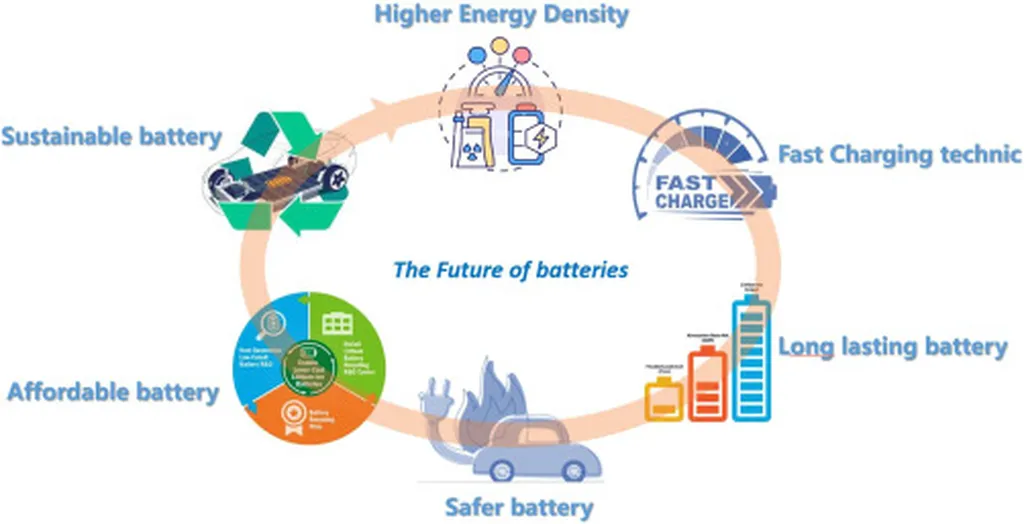
The practical applications of these frameworks are vast. For instance, PIDEOPONETs could be used for real-time lithium concentration prediction to ensure safe fast-charging and detect micro short circuits in batteries. PINOs could optimize water management in fuel cells and enhance power management in electrolyzers under intermittent renewable energy inputs. These advancements could significantly improve the efficiency, safety, and reliability of electrochemical devices, accelerating the transition to green energy.
The study establishes physics-informed operator learning as a transformative approach for next-generation electrochemical device controller technology. By leveraging the strengths of each framework, researchers and engineers can develop more robust and efficient control systems, ultimately driving the energy sector towards a more sustainable future.
This article is based on research available at arXiv.