
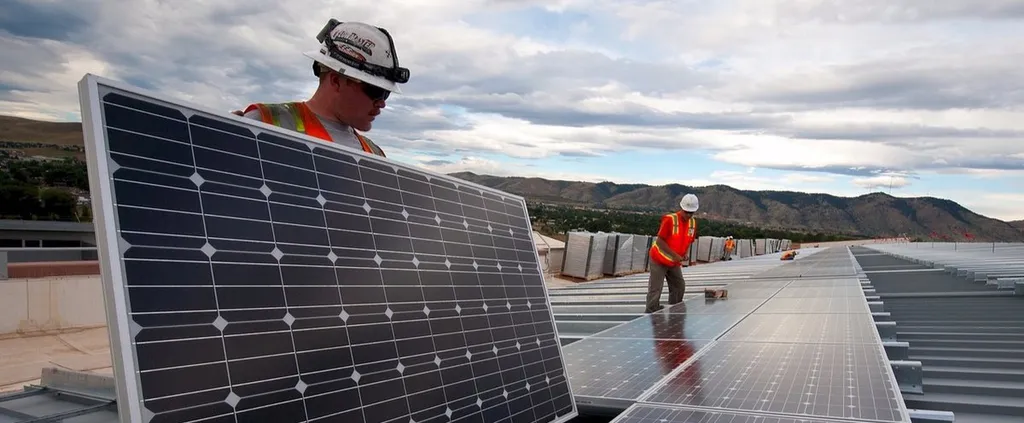
In the realm of renewable energy integration, a team of researchers from ESTIA Institute of Technology in France has been exploring innovative ways to optimize collective self-consumption of photovoltaic (PV) energy. The team, comprising Camblong H., Curea O., Ugartemendia J. J., Boussaada Z., Lizarralde I., and Etxegarai G, has conducted a study on the implementation and testing of different PV energy sharing methods in a real-world setting at the Izarbel technological park.
The study, published in the journal Energy Policy, delves into the concept of collective self-consumption (CSC), where PV energy produced by one entity is shared and consumed by multiple entities within the same community or network. The researchers focused on the self-consumption rate (SCR) and the potential savings that can be achieved through different energy sharing methods.
The research was conducted at the ESTIA Institute of Technology, where PV energy is produced in one building (ESTIA1) and consumed in three buildings (ESTIA1, 2, and 4). The main components used to implement the CSC system include smart meters and Tecsol TICs, which are devices based on the LoRa protocol to retrieve production and consumption data.
The study highlights three types of PV energy sharing/allocation methods: static, dynamic by default, and customized dynamic. Static sharing involves a fixed allocation of energy based on predefined criteria, while dynamic by default and customized dynamic sharing involve real-time adjustments based on production and consumption patterns. The researchers also explained the structure of the electricity bill in France, which is crucial for understanding the economic implications of different sharing methods.
The team compared the three sharing methods across four scenarios: without and with a data center, and for low and high solar radiation. The results showed that dynamic allocations lead to increases in the SCR, and customized dynamic sharing, in particular, resulted in higher savings. This indicates that real-time adjustments and tailored sharing methods can significantly improve the efficiency and economic viability of collective self-consumption systems.
The practical applications of this research for the energy sector are substantial. By optimizing PV energy sharing, communities and businesses can reduce their reliance on the grid, lower their electricity bills, and contribute to a more sustainable energy future. The findings can guide energy providers, policymakers, and consumers in implementing more effective collective self-consumption systems, thereby accelerating the integration of renewable energy sources into the grid.
This article is based on research available at arXiv.