
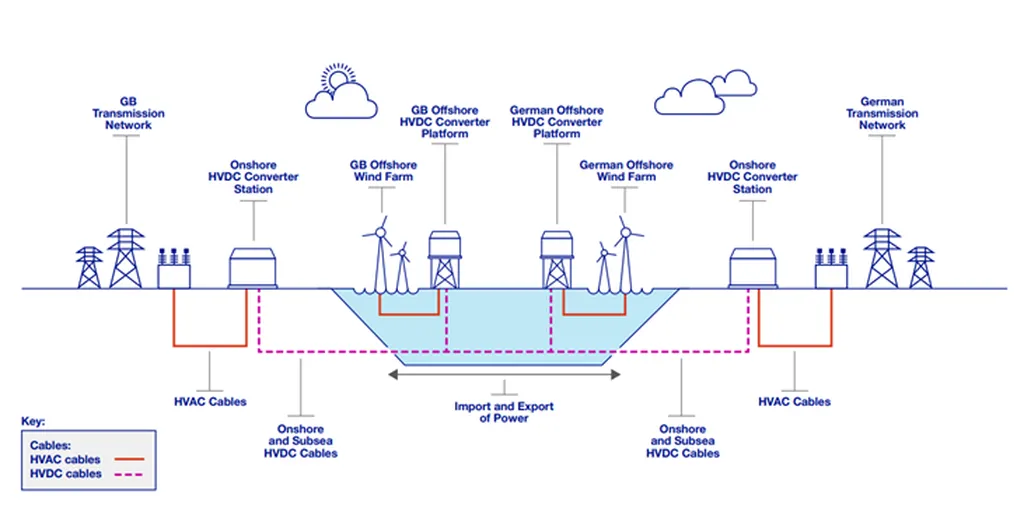
National Grid and TenneT Germany have unveiled plans for GriffinLink, a pioneering multi-purpose interconnector designed to link offshore wind resources between the UK and Germany. Announced at the North Sea Summit in Hamburg, the project aims to bolster energy security, facilitate offshore wind connections, and promote coordinated infrastructure planning across borders.
GriffinLink stands out as the first multi-purpose interconnector of its kind in Europe, connecting offshore wind farms in both countries to the respective national grids. Ben Wilson, president of National Grid Ventures, emphasized the project’s role in enhancing energy system flexibility. “We are proud to work with TenneT Germany on this groundbreaking project that will enhance the diversity and flexibility in our energy systems,” Wilson stated.
Tim Meyerjürgens, chief executive of TenneT Germany, highlighted the significance of the project for cross-border cooperation. “GriffinLink is the first project of its kind in Europe and will be a major milestone in cross-border energy security,” Meyerjürgens said. The partners noted that hybrid interconnectors like GriffinLink enable the transport of renewable electricity across borders to areas of highest demand. This integrated approach could optimize grid utilization, reduce costs, and minimize impacts on coastal communities and the environment.
Ed Miliband, secretary of state for energy security and net zero, welcomed the plans, stating, “These ambitious plans by National Grid and TenneT Germany could deliver further benefits for both Britain and Germany.” The project builds on National Grid’s 7.8GW interconnector portfolio and TenneT Germany’s 23GW portfolio. GriffinLink is expected to be operational by the late 2030s, supporting the deployment of offshore wind in the Northern Seas and addressing rising electricity demand.
The development of GriffinLink could set a precedent for future cross-border energy projects, encouraging greater collaboration and innovation in the renewable energy sector. By facilitating the transfer of renewable electricity across national boundaries, the interconnector could play a crucial role in achieving energy security and net-zero targets. The project also underscores the importance of coordinated infrastructure planning in maximizing the benefits of offshore wind resources. As the energy sector continues to evolve, initiatives like GriffinLink may become increasingly vital in shaping a more sustainable and interconnected energy landscape.