
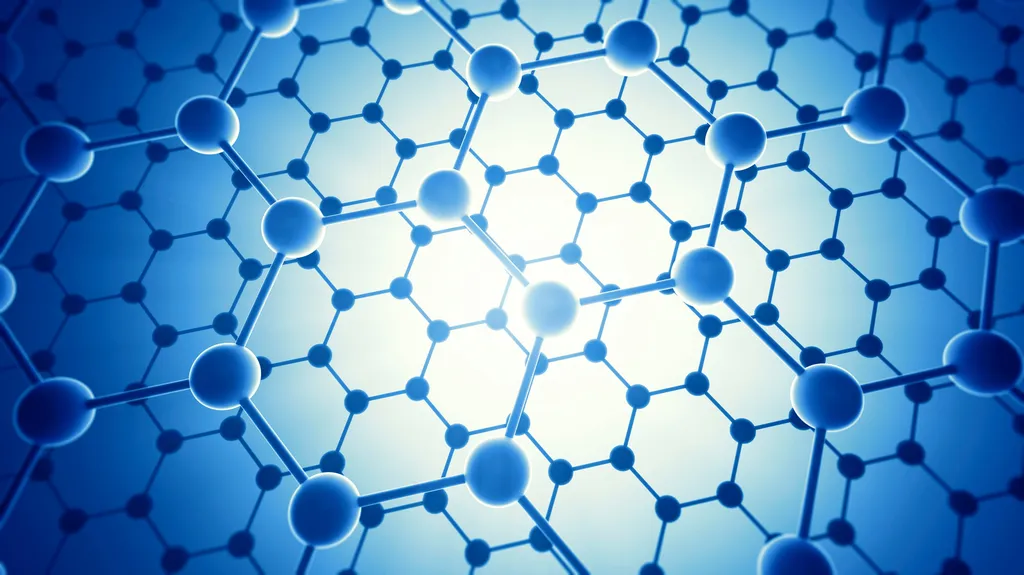
In the realm of energy and materials science, a team of researchers from the University of Science and Technology of China has been delving into the intriguing properties of graphene, a two-dimensional form of carbon with remarkable electrical and mechanical properties. The team, comprising Yaorui Tan, Xiang Chen, Yunhu Zhu, Xiaowu Yang, Zhongkai Huang, Chuang Yao, and Maolin Bo, has recently published their findings in the journal Physical Review B.
The study focuses on the electrostatic screening effects in graphene, a critical factor that influences the material’s electronic structure and, consequently, its potential applications in the energy sector. Electrostatic screening refers to the ability of a material to shield external electric fields, which can significantly impact the behavior of electrons within the material.
The researchers employed tight binding calculations under two models—the BBC and modified BBC—to investigate these effects. Their findings reveal that the modified BBC potential effectively suppresses electron-electron interactions, a crucial aspect for controlling the material’s electronic properties. The hopping integrals, which represent the energy required for an electron to move from one atom to another, decrease by 65% over distance and shift by 7% with varying electrostatic screening strength (sigmav). Meanwhile, the on-site energy, which is the energy of an electron when it is localized on an atom, rises linearly by 0.045 eV.
One of the most significant findings is the opening of a band gap in graphene when the electrostatic screening strength (sigmav) is greater than or equal to 1.00. A band gap is a range of energy in a material where no electron states can exist, and it is a crucial factor in determining the material’s electrical conductivity. The presence of a band gap makes graphene more suitable for semiconductor applications, which are vital in the energy sector for developing efficient and compact electronic devices.
The density of states, which describes the number of electron states at each energy level, peaks near the Fermi level—the highest energy level occupied by electrons at absolute zero temperature. However, the low energy region remains largely unaffected by the electrostatic screening effects. This suggests that graphene’s unique electronic properties are preserved at low energies, which is beneficial for applications requiring high conductivity and low energy dissipation.
Moreover, the study highlights that graphene’s low energy helical wave functions yield topological features such as pseudospin momentum locking and a pi Berry phase. These properties lead to distinct transport behavior, which could be harnessed for designing topological devices. Topological devices are a promising area of research in the energy sector, as they offer robust and energy-efficient solutions for information processing and storage.
The researchers’ model avoids the Coulomb singularity, a mathematical inconsistency that arises in certain electrostatic calculations. This advancement provides valuable insights for 2D screening engineering and topological device design, paving the way for innovative applications in the energy industry.
In summary, this study offers a deeper understanding of graphene’s electronic structure and its modulation through electrostatic screening. The findings have practical implications for the energy sector, particularly in the development of advanced semiconductor devices and topological technologies. The research was published in the esteemed journal Physical Review B, underscoring its significance and potential impact on the scientific community.
This article is based on research available at arXiv.