
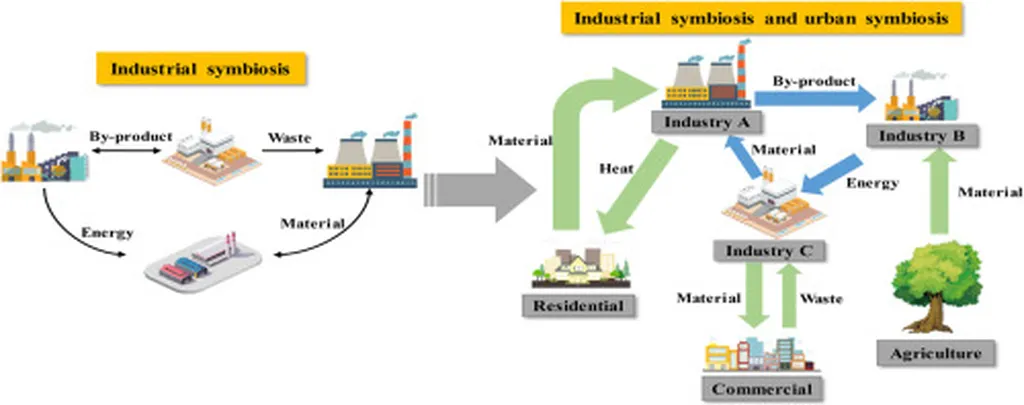
Irene Paoletti, EU Project Manager for Energy Efficiency in Industrial Processes (EEIP), argues that urban industrial symbiosis could be a game-changer in Europe’s sustainable energy transition. By fostering connections between cities and industries, this approach aims to share resources, cut energy use, and reduce emissions, all while building resilient and competitive local partnerships.
Industry in the EU is decarbonising, but the role of industrial symbiosis remains underexploited. Paoletti contends that urban industrial symbiosis offers a powerful pathway to reduce energy demand, strengthen resilience, and unlock systemic efficiency gains. It transforms locality into a partnership, enabling structured exchanges where one actor’s excess heat, by-products, or services become another’s input. This shared experience of circularity can reduce primary energy demand and emissions across multiple sectors.
Early projects have demonstrated feasibility and added value, with follow-up initiatives benefiting from shared data, clearer business practices, and established governance arrangements. Paoletti notes that these systems are not static; they can evolve into a virtuous cycle of continuous efficiency gains, driven by peer learning and replication. This partnership becomes a long-term win-win, making regions stronger when cities and industries work together.
However, urban industrial symbiosis does not develop automatically. Paoletti emphasises the importance of dedicated coordination structures or neutral third-party facilitators. These facilitators can help align interests, manage exchanges, and ensure continuity over time, moving beyond isolated pilots towards stable, investable systems.
Paoletti highlights several EU-funded projects related to industrial symbiosis that demonstrate feasibility and impact. The next step is mainstreaming these lessons into policy frameworks, infrastructure planning, and investment decisions. She argues that urban industrial symbiosis, while complicated, brings together many actors in a symbiotic, sustainability-oriented relationship. EU-funded projects like REDOL provide a level of confidence through their track record of experience in different countries and contexts.
Paoletti concludes that industrial symbiosis has an important role in making the unknowns better known. As the EU’s industry understands this turning point for change, urban industrial symbiosis could shape the development of the sector, fostering cooperation and embedding sustainability into long-term strategies. This approach aligns with the objectives of the European Union, reinforcing participation and competitiveness while delivering environmental and social value.