
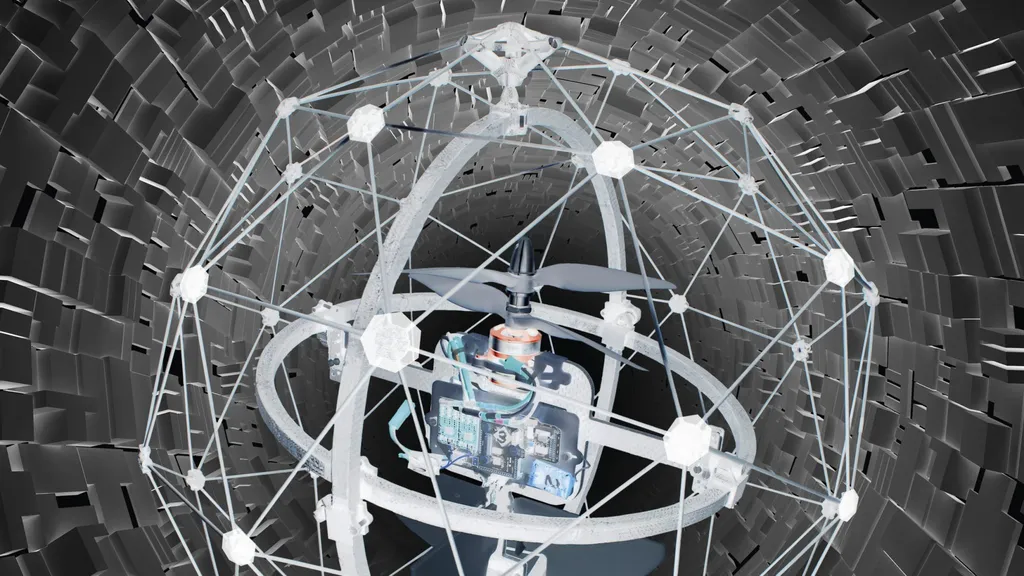
In the rapidly evolving landscape of mobile and wireless networks, a team of researchers from the École Polytechnique Fédérale de Lausanne (EPFL) in Switzerland has developed a novel framework aimed at enhancing robotic autonomy. The team, led by Cyril Shih-Huan Hsu and including Xi Li, Lanfranco Zanzi, Zhiheng Yang, Chrysa Papagianni, and Xavier Costa Pérez, has introduced MapViT, a two-stage Vision Transformer (ViT)-based framework designed to predict environmental changes and radio signal quality in dynamic environments. Their work was recently published in the IEEE Internet of Things Journal.
MapViT is inspired by the pre-train and fine-tune paradigm used in Large Language Models (LLMs). The framework is designed to provide real-time predictions, which is crucial for robots operating in energy- and resource-constrained environments. The researchers evaluated MapViT using a set of representative Machine Learning (ML) models, analyzing their strengths and limitations across various scenarios. The experimental results demonstrated that the two-stage pipeline of MapViT achieves a strong balance between accuracy and computational efficiency.
One of the key advantages of MapViT is its ability to improve data efficiency and transferability. This is achieved through a self-supervised pre-training stage that derives a geometry foundation model. This feature enables effective downstream predictions even with limited labeled data, which is a significant benefit for practical applications in the energy sector.
For the energy industry, the practical applications of MapViT are manifold. For instance, in smart grids, robots and drones equipped with MapViT could monitor and predict the quality of radio signals used for communication between grid components. This could enhance the reliability and efficiency of energy distribution networks. Additionally, in the context of renewable energy, MapViT could be used to predict environmental changes that might affect the performance of solar panels or wind turbines, allowing for better maintenance and optimization strategies.
The researchers highlight that their work lays the foundation for next-generation digital twin ecosystems. Digital twins are virtual replicas of physical systems that can be used for simulation, monitoring, and optimization. In the energy sector, digital twins can be used to model and optimize energy systems, from individual components to entire grids. MapViT’s ability to predict environmental changes and radio signal quality could enhance the accuracy and effectiveness of these digital twins, leading to more efficient and reliable energy systems.
In conclusion, the development of MapViT represents a significant step forward in the field of robotic autonomy and machine learning. Its potential applications in the energy sector are promising, offering new ways to enhance the reliability and efficiency of energy systems. As the researchers continue to refine and expand the capabilities of MapViT, it is likely to play an increasingly important role in the future of energy management and distribution.
Source: IEEE Internet of Things Journal
This article is based on research available at arXiv.