
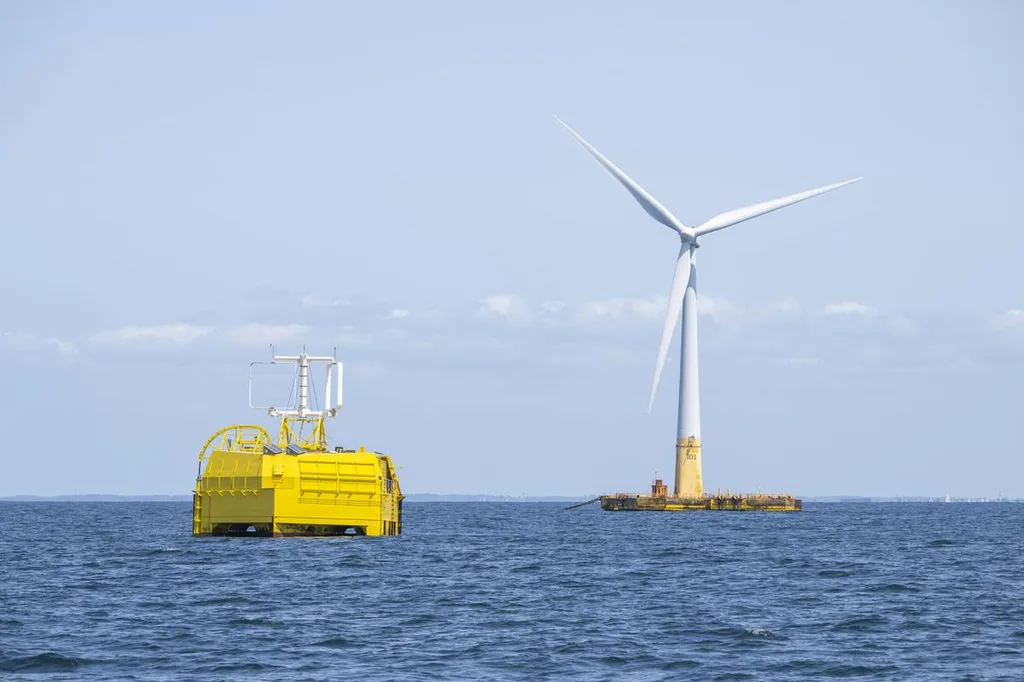
In the quest for cleaner energy solutions, a team of researchers from the Norwegian University of Science and Technology (NTNU) has proposed an innovative approach to power offshore oil and gas platforms using wind energy and hydrogen. The team, led by Maiken Borud Omtveit, includes Qian Long, Valentin Chabaud, Marte Ruud-Olsen, Steinar Halsne, and Tor-Christian Ystgaard, who collectively have expertise in energy systems and offshore operations.
The researchers have developed a concept called Clean Offshore Heat and Power (CleanOFF) Hub, which integrates wind farms and hydrogen hubs to provide a sustainable and reliable power source for offshore oil and gas platform clusters. This off-grid design offers an alternative to conventional electrification methods, reducing the carbon footprint of offshore operations.
To address the complexities of designing and operating such a system, the team created a power system model using the Process Power Simulator (PPSim). This model incorporates advanced methods to simulate power fluctuations in wind farms, considering factors like turbulence and wakes. By running various operational scenarios, the researchers were able to evaluate the system design and determine the optimal equipment size.
One of the key findings of the study is the significant impact of battery energy storage systems (BESS) on the overall system design. Over-dimensioning BESS can be expensive, so the team ran scenarios with extreme and natural wind variations, as well as contingencies, to find the right BESS power rating and energy capacity. They discovered that the control strategy and ramp rates of electrolyzers play a crucial role in system performance and design. For instance, using a ramp rate in the order of seconds, rather than minutes, can reduce the required BESS size by 60-70%. Additionally, synchronized control of electrolyzers can further decrease the BESS size by 15-20%.
The simulations also highlighted challenges in achieving self-sufficiency in hydrogen production. The researchers suggested potential design improvements to address this issue, emphasizing the need for careful planning and optimization in the development of offshore hydrogen hubs.
The findings of this study, published in the journal Applied Energy, offer valuable insights for the energy sector, particularly for companies operating offshore oil and gas platforms. By adopting the CleanOFF Hub concept, energy companies can reduce their reliance on fossil fuels and contribute to a more sustainable energy future. The research also underscores the importance of advanced power system modeling and control strategies in the design and operation of integrated offshore energy systems.
In conclusion, the CleanOFF Hub concept presents a promising avenue for decarbonizing offshore operations. As the energy industry continues to evolve, innovative solutions like this will play a crucial role in achieving a cleaner and more sustainable energy landscape.
This article is based on research available at arXiv.