
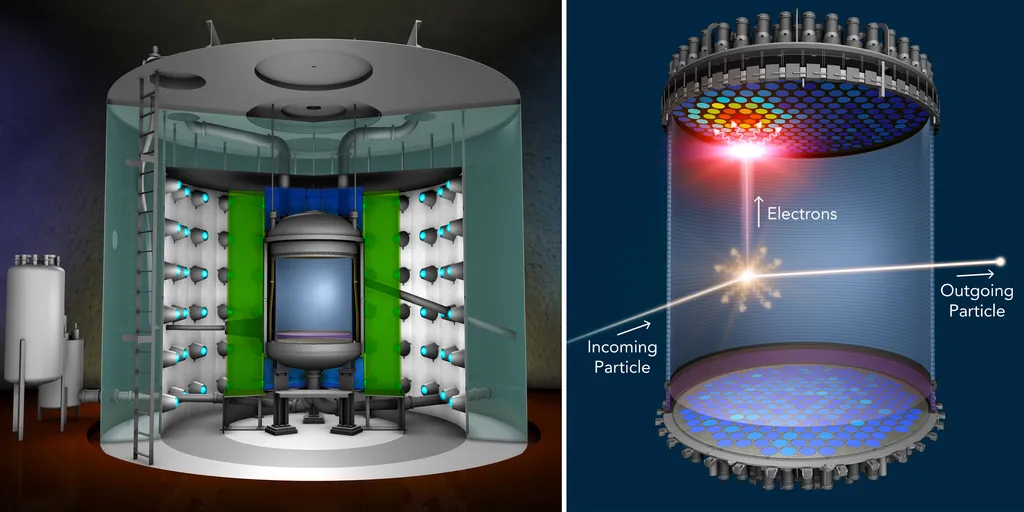
In the realm of energy research, understanding the interactions between neutrinos and atomic nuclei is crucial for advancing technologies like neutrino-based energy production and detection systems. A team of researchers from the University of Rochester, including Jake McKean, Laura Munteanu, and Seisho Abe, has recently delved into this complex area, publishing their findings in the journal Physical Review D.
The researchers examined three nuclear ground state shell models implemented in the NEUT neutrino event generator. Their goal was to benchmark these models against the recent JSNS² measurement of missing energy using a monoenergetic neutrino source. The unique nature of this measurement allowed for a detailed investigation of nuclear ground-state modeling using a neutrino source, providing direct access to the neutron spectral function in a carbon-12 nucleus.
The NEUT intranuclear cascade and nuclear deexcitation (NucDeEx) were employed to simulate inelastic final-state interactions and nuclear deexcitations, respectively. The study found that spectral function (SF) models outperformed relativistic mean field models in accurately representing both the ground state and the tail of the missing energy distribution. This was particularly evident when the NEUT cascade and nuclear excitation channels were activated.
Furthermore, the researchers discovered that accounting for the missing energy threshold for single nucleon knockout interactions resulted in all nuclear models being accepted based on the obtained p-values. This finding underscores the importance of considering energy thresholds in neutrino-nucleus interactions, a factor that could have significant implications for the energy industry.
The practical applications of this research are manifold. For instance, a deeper understanding of neutrino-nucleus interactions can enhance the design and efficiency of neutrino detectors, which are essential for monitoring nuclear reactors and ensuring safety. Additionally, this knowledge can contribute to the development of advanced nuclear energy technologies, such as those involving neutrino-driven processes.
In summary, the work by McKean, Munteanu, and Abe provides valuable insights into the modeling of neutrino-nucleus interactions, with potential benefits for the energy sector. Their findings highlight the importance of accurate nuclear ground-state modeling and the consideration of energy thresholds in neutrino-based technologies. As the energy industry continues to evolve, such research will be instrumental in driving innovation and improving safety standards.
This article is based on research available at arXiv.