
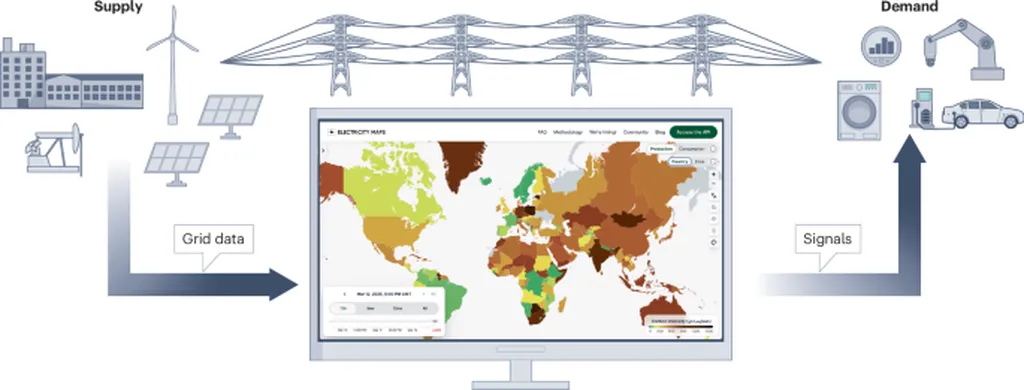
In the realm of energy and environmental research, a trio of scientists from the Technical University of Madrid, María Castrillo Melguizo, Jaime Iglesias Blanco, and Álvaro López García, have developed a tool that aims to provide a more comprehensive view of the environmental impacts of electricity consumption. Their work, published in the journal Applied Energy, introduces Wattnet, an open-source tool designed to assess both the carbon footprint (CF) and water footprint (WF) of electricity consumption across Europe with high temporal resolution.
The researchers highlight that while the carbon footprint of electricity consumption is commonly assessed, the water-related impacts are often overlooked. This oversight is particularly relevant for electricity-intensive activities such as data center (DC) operations, where both carbon emissions and water use occur largely off-site through electricity consumption. Wattnet addresses this gap by implementing an electricity flow-tracing methodology that accounts for local generation mixes, as well as for cross-border electricity imports and exports at a 15-minute resolution. This high temporal resolution is crucial for accurately assessing the environmental impacts of electricity consumption, as it allows for the consideration of temporal variability in electricity generation and consumption.
The results of the study demonstrate that neglecting electricity flows and temporal variability can lead to significant misestimations of both CF and WF, particularly in countries with high levels of electricity trade or hydropower dependence. The joint analysis conducted using Wattnet reveals trade-offs between decarbonisation and water use, highlighting the prominent role of reservoir-based hydropower in increasing WF even in low-carbon systems. This finding underscores the importance of considering both carbon and water footprints when assessing the environmental impacts of electricity consumption.
From a practical perspective, Wattnet facilitates informed decision-making for workload scheduling and energy-aware operation of data centers. By providing a clear and comprehensive view of the environmental impacts of electricity consumption, Wattnet can help data center operators to optimize their operations in a way that minimizes both carbon emissions and water use. Furthermore, the tool enhances transparency regarding the environmental impacts of electricity consumption for end users and policymakers, enabling them to make more informed decisions about their energy use and policies.
In conclusion, the development of Wattnet represents a significant step forward in the assessment of the environmental impacts of electricity consumption. By providing a comprehensive and accurate view of both carbon and water footprints, Wattnet can help to inform decision-making and drive progress towards a more sustainable energy future. The research was published in the journal Applied Energy, and the tool is available as an open-source resource for use by researchers, policymakers, and industry stakeholders.
Source: Castrillo Melguizo, M., Iglesias Blanco, J., & López García, Á. (2023). Wattnet: matching electricity consumption with low-carbon, low-water footprint energy supply. Applied Energy, 337, 120905.
This article is based on research available at arXiv.