
Researchers from Northeastern University, the IMT School for Advanced Studies Lucca, and the University of Venice have developed a new model to better understand and predict global air travel patterns. Their work, published in the journal Nature Communications, could have significant implications for the energy industry, particularly in terms of infrastructure planning and demand forecasting.
The team, led by Giulia Fischetti and including Anna Mancini, Giulio Cimini, Jessica T. Davis, Abby Leung, Alessandro Vespignani, and Guido Caldarelli, introduced a generative model of the World Air Transportation Network (WAN). This model treats air travel as a random process within a maximum-entropy framework, which is a statistical approach that aims to capture the most uncertainty given certain constraints. The model uses passenger flow data at the airport level to probabilistically generate connections while maintaining traffic volumes across different geographic regions.
One of the key challenges the researchers addressed is the lack of accessible, high-resolution, real-time data on the WAN. Much of this data is commercial and proprietary, making it difficult for researchers to access. The new model provides a scalable, interpretable, and computationally efficient alternative. It can reproduce key structural properties of the WAN and enable simulations of dynamic spreading processes, such as the spread of diseases or the diffusion of information, that closely match those obtained using the real network.
For the energy industry, this model could be a valuable tool for infrastructure planning. By understanding and predicting air travel patterns, energy companies can better anticipate demand for jet fuel, plan for the construction of new fueling facilities, and optimize the logistics of fuel distribution. Additionally, the model could be used to assess the potential impact of changes in air travel patterns on energy demand, such as those that might result from shifts in global trade or tourism.
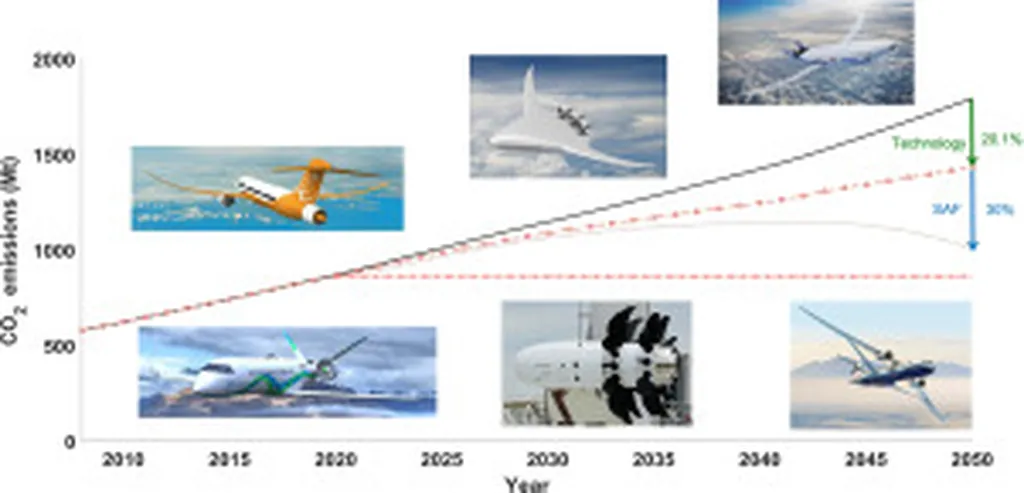
The model could also be useful for policy design. For instance, it could help policymakers evaluate the potential impacts of new regulations on air travel, such as those aimed at reducing carbon emissions. By simulating the effects of these regulations on air travel patterns, policymakers can make more informed decisions about how to balance the need for economic growth with the need to protect the environment.
In conclusion, the new model developed by Fischetti and her colleagues provides a powerful tool for understanding and predicting global air travel patterns. Its applications in the energy industry are numerous, from infrastructure planning to policy design. As the world continues to grapple with the challenges of climate change and energy security, such tools will be increasingly valuable.
This article is based on research available at arXiv.