
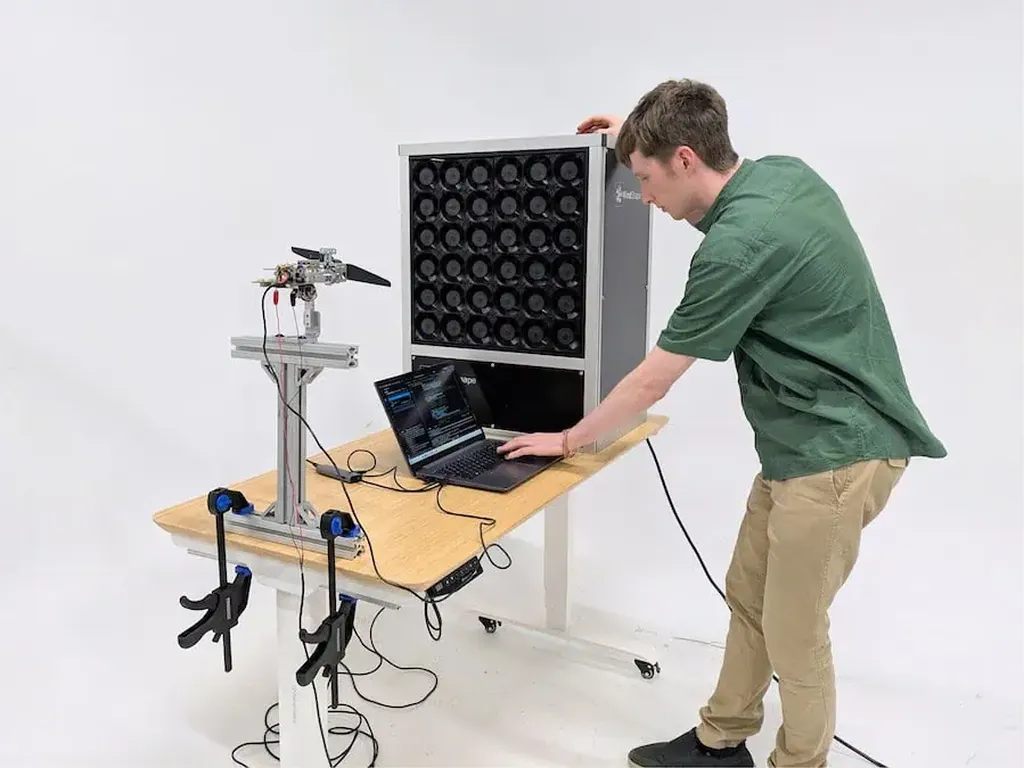
Researchers from the University of Padova, led by Erwan Tanguy-Legac, have developed a specialized hardware accelerator designed to improve the real-time control of robotic systems, particularly those used in unmanned aerial vehicles (UAVs). The team, which includes Tommaso Belvedere, Gianluca Corsini, Marco Tognon, and Marcello Traiola, has focused on enhancing the computational efficiency of Model Predictive Path Integral (MPPI) control algorithms, a critical component for precise robotic navigation.
Accurately controlling robotic systems in real time is a complex challenge, especially for non-linear systems like UAVs. Traditional Model Predictive Control (MPC) algorithms can be difficult to implement on such systems, while MPPI control, though effective, demands significant computational resources. Graphics Processing Units (GPUs) have been used to accelerate MPPI implementations, but their high power consumption makes them impractical for battery-powered autonomous systems. Custom hardware designs, often implemented on Field-Programmable Gate Arrays (FPGAs), offer a more energy-efficient alternative for accelerating robotic algorithms. However, until now, no custom accelerator specifically for MPPI control has been developed.
The researchers have addressed this gap by designing and simulating a hardware accelerator tailored for MPPI control. Their results indicate that this custom accelerator not only reduces energy consumption compared to GPU implementations but also allows for more accurate trajectories. This advancement could be particularly beneficial for the energy sector, where UAVs are increasingly used for tasks such as inspections of wind turbines, solar farms, and other energy infrastructure. By improving the precision and efficiency of robotic control systems, this technology could enhance the reliability and cost-effectiveness of these operations.
The research was published in the IEEE Robotics and Automation Letters, a reputable journal in the field of robotics and automation. This development underscores the potential for specialized hardware solutions to overcome the computational and energy challenges associated with advanced robotic control systems, paving the way for more efficient and accurate applications in the energy industry.
This article is based on research available at arXiv.