
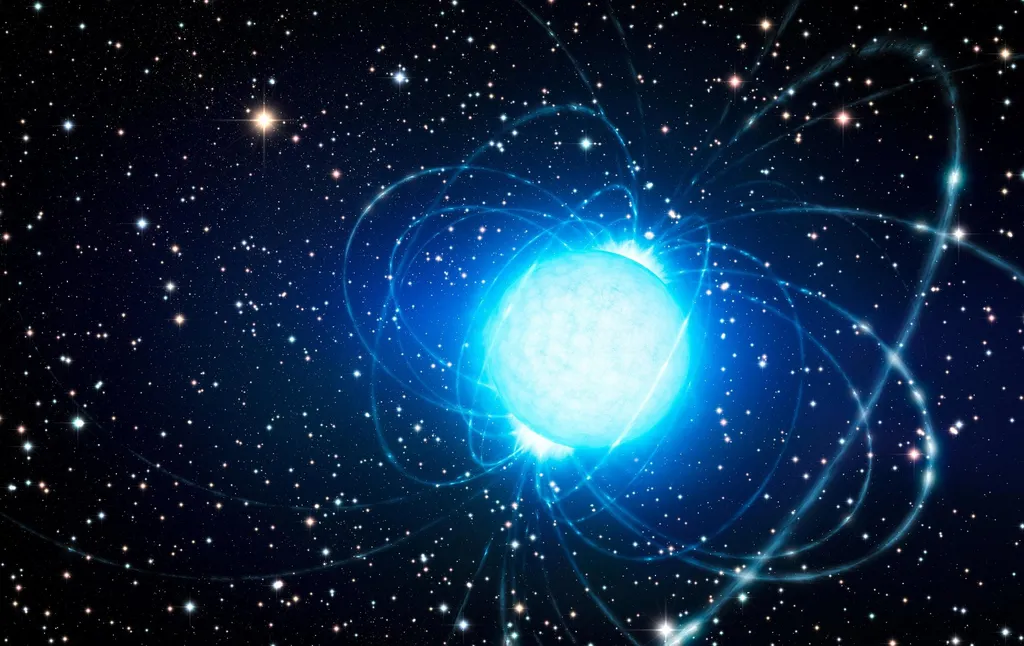
In the realm of energy research, understanding the fundamental properties of matter under extreme conditions is crucial for advancing various energy technologies, from nuclear power to astrophysics. Researchers Anagh Venneti, Sarmistha Banik, and Bijay K Agrawal from the University of Houston have delved into the intricate world of neutron stars to shed light on the behavior of matter at high densities. Their work, published in the journal Physical Review C, offers insights that could have implications for both nuclear physics and energy applications.
The team focused on constructing models of the equation of state (EoS) for matter found in neutron stars, specifically beyond the inner crust. The EoS describes the relationship between density, pressure, and energy in a given system. To achieve this, they incorporated constraints from finite nuclei (FN) within relativistic mean field models. These constraints were applied in three different ways: through theoretical bounds on the EoS, via nuclear matter parameters, and by ensuring consistency with experimental data on nuclear binding energies and charge radii.
The researchers found that the inclusion of explicit FN constraints significantly narrowed the range of possible transition densities, which is the density at which a phase transition occurs in the neutron star’s core. This narrowing effect was particularly pronounced when explicit FN constraints were applied, reducing the allowed parameter space by nearly half. Consequently, the properties of neutron stars inferred from these constrained EoSs differed substantially, especially for low-mass neutron stars and their correlations with nuclear matter parameters.
The study also highlighted the importance of a consistent treatment of finite-nuclei properties for reliably interpreting astrophysical observations. By comparing their models with data from pulsars like PSRs J0740+6620, J0030+0451, and J0437-4715, the researchers found good agreement. However, they noted a potential tension with observations of PSR J0614-3329, suggesting areas for further investigation.
For the energy sector, this research underscores the importance of understanding the fundamental properties of matter under extreme conditions. Insights gained from studying neutron stars can inform the development of advanced nuclear energy technologies and improve our understanding of astrophysical phenomena. By refining our models of the EoS, we can better predict the behavior of matter in high-density environments, which is crucial for both scientific and practical applications in energy research.
In summary, the work by Venneti, Banik, and Agrawal provides a deeper understanding of the behavior of matter in neutron stars and highlights the critical role of finite-nuclei constraints in shaping our models of high-density matter. Their findings, published in Physical Review C, offer valuable insights that could have far-reaching implications for the energy industry and astrophysics.
This article is based on research available at arXiv.