
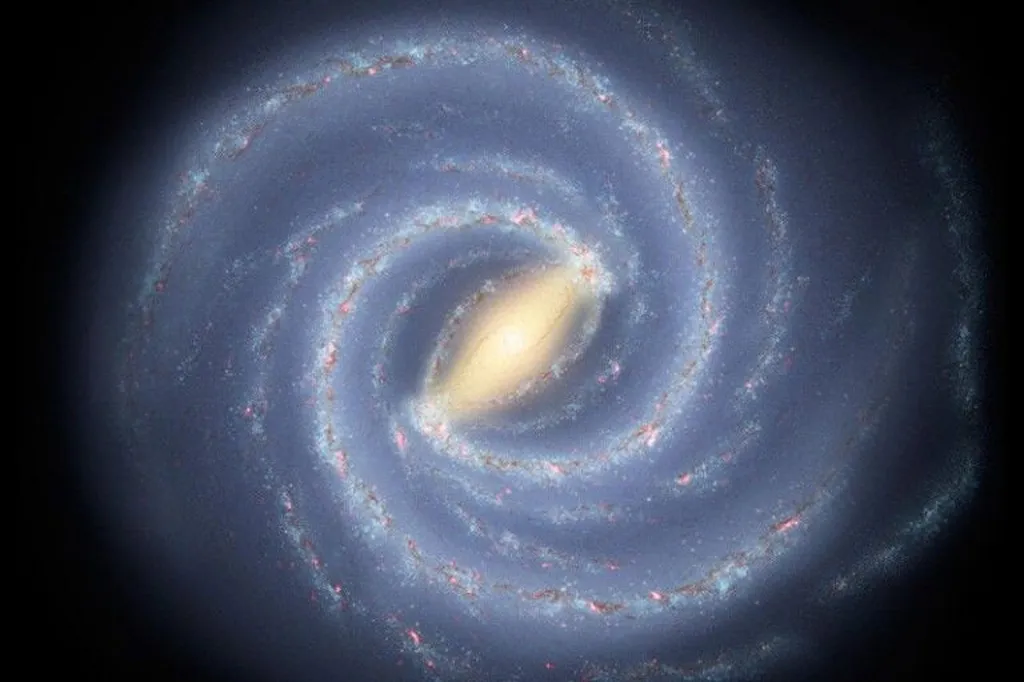
In the realm of energy journalism, it’s crucial to stay informed about scientific research that could potentially impact the energy sector. A recent study, led by Jyoti Yadav, Jong-Hak Woo, and Ashraf Ayubinia from the University of Florida, delves into the environmental parameters and gas fraction properties of type 2 active galactic nuclei (AGN) and non-AGN galaxies. Their findings, published in the Astrophysical Journal, offer insights that could influence our understanding of galaxy evolution and, by extension, energy production and consumption in the universe.
The research team utilized a large sample of galaxies from the Sloan Digital Sky Survey Data Release 7, focusing on galaxies with a redshift of 0.3 or less. They found that the environment affects type 2 AGN and non-AGN galaxies in similar ways and does not impact the strength of AGN-driven outflows. This suggests that the local environment of a galaxy does not significantly influence the power of these outflows, which are driven by the supermassive black holes at the centers of AGN.
One of the key findings of this study is that the gas fraction (f$_{gas}$) of type 2 AGN and non-AGN host galaxies shows no variation between group and isolated environments. This indicates that the host galaxy’s gas content is largely independent of the large-scale environment. However, the researchers also discovered that type 2 AGN host galaxies possess systematically lower f$_{gas}$ than their non-AGN counterparts when matched in stellar mass and star formation rate (SFR). This suggests that AGN activity plays a significant role in regulating the molecular gas reservoir and, consequently, the star formation processes within galaxies.
The study also found that type 2 AGNs exhibiting strong outflows are associated with higher gas fractions, higher star-formation rates, and younger stellar populations than those with weak or no outflows. This could indicate that powerful outflows and star formation occur concurrently in gas-rich systems, or it might suggest a time delay between AGN activity and its effect on star formation, consistent with a delayed AGN feedback scenario.
In the context of the energy industry, understanding the processes that regulate star formation and galaxy evolution can provide insights into the life cycles of stars, which are the ultimate sources of energy in the universe. The findings of this study could potentially influence our understanding of the distribution and availability of resources in the universe, as well as the processes that drive energy production and consumption on a cosmic scale. As such, this research highlights the importance of continued investment in scientific exploration and discovery, as these efforts can yield valuable insights that inform our understanding of the energy landscape and beyond.
This article is based on research available at arXiv.