
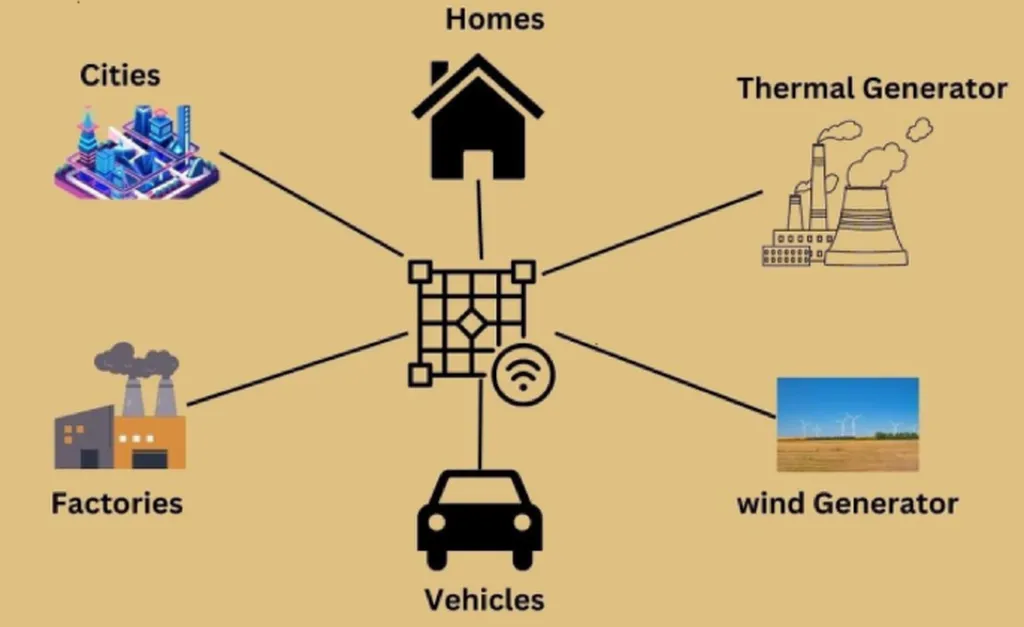
A groundbreaking integration of blockchain, IoT sensors, and satellite data is transforming microgrid resilience and energy trading, as demonstrated by a series of pilot projects deployed in early 2026. These systems, now operational in select regions, leverage real-time monitoring and decentralized ledger technology to detect faults, isolate affected areas, and maintain power supply through peer-to-peer energy trading—even under extreme conditions. The innovation marks a significant leap forward for decentralized energy systems, offering a scalable model for communities seeking to enhance grid independence and sustainability.
At the core of this advancement is the fusion of blockchain’s immutable ledger with IoT’s real-time data acquisition. Satellite feeds and IoT sensors continuously measure solar output, battery storage levels, and local demand, feeding this data into a blockchain platform. When a fault is detected—such as a line outage or cyberattack—the system automatically disconnects the affected segment, or “islands” it, and reroutes power from local renewable sources and storage. This capability was recently validated during a simulated attack on a European microgrid, where the system maintained uninterrupted power to critical infrastructure by trading surplus solar and battery capacity among prosumers within seconds.
The integration of Electric Vehicles (EVs) as mobile storage assets further amplifies the system’s robustness. With millions of EVs parked for most of the day, their batteries can be tapped to balance local demand spikes or supply shortfalls. “By 2026, the rapid adoption of EVs has created an accidental but massive energy storage network,” noted a project engineer involved in the pilot. “Blockchain ensures that every kilowatt-hour traded is accounted for, and smart contracts automate the transactions, eliminating the need for intermediaries and reducing costs”.
This approach directly addresses two persistent challenges in decentralized energy: intermittency and trust. Traditional microgrids often struggle with the variability of renewable sources and the complexity of coordinating multiple stakeholders. By using blockchain for transparent, tamper-proof record-keeping and IoT for granular, real-time data, the new model ensures both reliability and accountability. Moreover, the system’s ability to operate autonomously during grid disruptions positions it as a critical tool for regions vulnerable to cyber-physical attacks or natural disasters.
The broader implications for energy policy and industry adoption are profound. As governments and utilities grapple with the dual pressures of decarbonization and grid modernization, blockchain-enabled microgrids offer a pathway to resilience without sacrificing sustainability. For policymakers, the technology presents an opportunity to incentivize local energy markets and reduce reliance on centralized infrastructure. For industry, it signals a shift toward asset-light, software-driven energy management—where value is derived not from owning generation capacity, but from orchestrating distributed resources with precision and trust.
“This isn’t just about keeping the lights on,” said a lead researcher on the project. “It’s about redefining what a grid can be: adaptive, democratic, and resilient. The next step is scaling these pilots into national frameworks, where every community can become its own energy hub”. As the energy sector stands on the brink of this transformation, the fusion of blockchain, IoT, and decentralized control may well become the new standard for smart grids worldwide.