
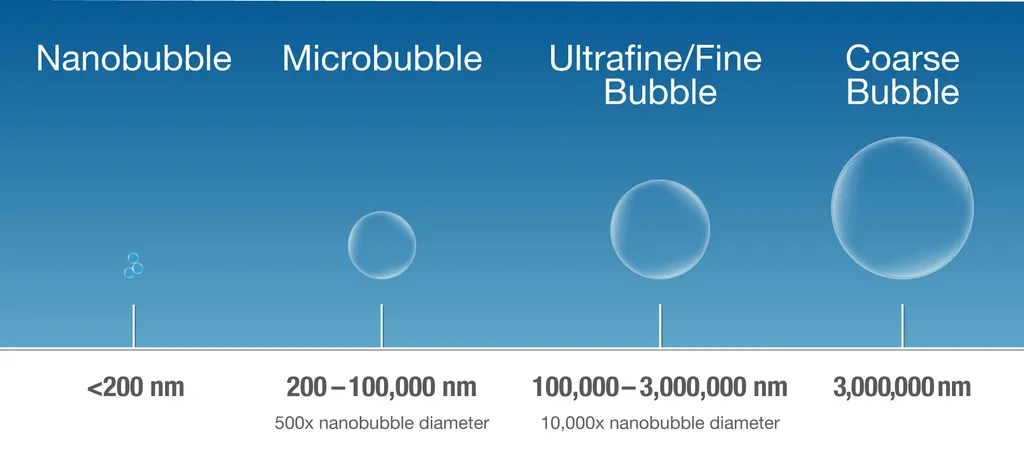
In the realm of energy research, understanding the behavior of tiny gas bubbles generated during electrochemical processes is crucial for improving the efficiency of energy-conversion systems. Researchers Nima Shakourifar, Nana Ofori-Opoku, and Benzhong Zhao from the University of California, Berkeley, have delved into this microscopic world to shed light on the nucleation and growth of hydrogen nanobubbles. Their work, published in the journal Nature Communications, offers valuable insights for the energy industry.
The team tackled a longstanding challenge in the field: the difficulty of observing and simulating the early stages of nanobubble formation. Existing experimental techniques lack the necessary temporal resolution, while molecular dynamics simulations are limited in scale. To overcome these hurdles, the researchers developed a sophisticated computational model that combines dissolved gas transport, interfacial thermodynamics, and bubble nucleation into a single framework.
Using hydrogen nanobubble formation as a test case, the model successfully captured the nucleation process without predefined nuclei. It also resolved the growth of bubbles under the influence of curvature effects and remained computationally feasible despite hydrogen’s low solubility. The simulations revealed that nanobubble nucleation occurs when a local supersaturation threshold is exceeded, triggering a reorganization of the chemical-potential field that directs dissolved gas toward the nascent bubble.
In systems with multiple catalysts, the researchers observed strong bubble-bubble interactions, including competitive growth, Ostwald ripening, and source occlusion. These interactions were driven by overlapping diffusion fields. The model was extended to dispersed catalyst populations, showing that nanobubble survival depends not only on catalyst size but also on spatial arrangement and diffusive competition. Consequently, only a subset of bubbles persist, while others dissolve and act as feeders.
The findings challenge the traditional view of electrogenerated nanobubbles as unavoidable parasitic byproducts. Instead, they suggest that these nanobubbles are emergent, spatially organized features that can be controlled to enhance electrode performance. By deliberately managing where bubbles nucleate and grow, engineers can preserve active area and mitigate transport losses, ultimately improving the efficiency of electrochemical energy-conversion systems.
This research offers practical applications for the energy sector, particularly in the design and optimization of electrodes for fuel cells, electrolyzers, and other electrochemical devices. By leveraging the insights gained from this study, engineers can develop more efficient and cost-effective energy technologies, contributing to a sustainable energy future.
Source: Shakourifar, N., Ofori-Opoku, N., & Zhao, B. (2023). Implicit nucleation and competitive dynamics of electrogenerated hydrogen nanobubbles. Nature Communications.
This article is based on research available at arXiv.