
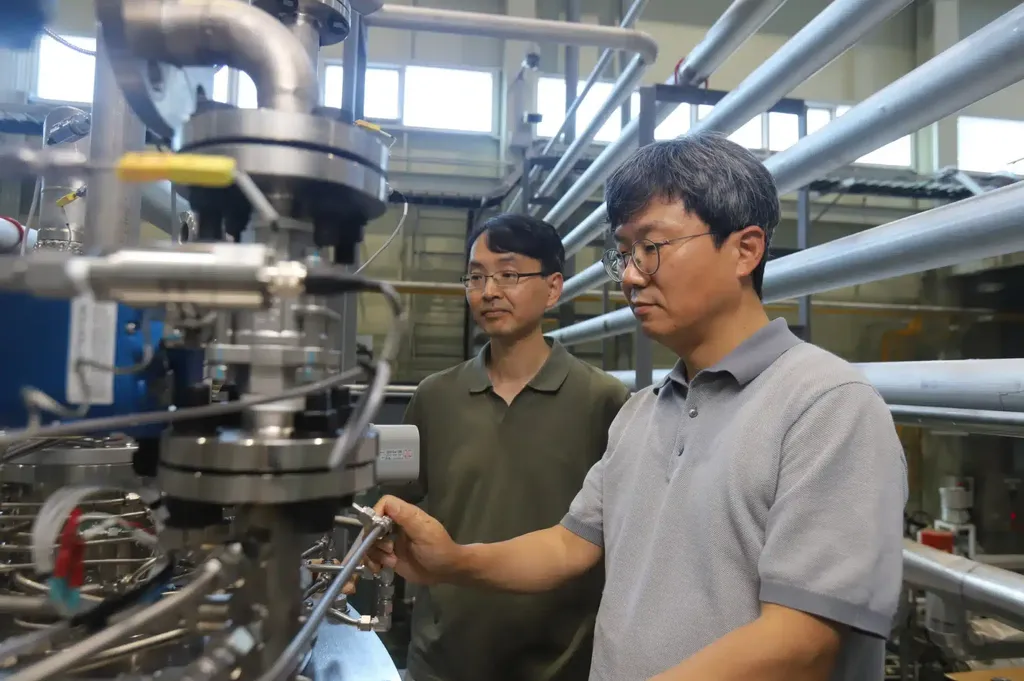
Researchers Ju-Hong Oh, Seon-In Kim, and Eui-Jong Kim from the Department of Architectural Engineering at Hanyang University in South Korea have developed a new approach to optimize thermal energy storage (TES) systems in buildings. Their work, published in the journal Applied Energy, focuses on improving the efficiency of heat pumps used for cooling in buildings by adjusting the temperature at which TES systems are charged.
Thermal energy storage systems are used to store excess energy generated during off-peak hours and release it during peak demand periods. This helps to reduce electricity costs and ease the strain on the power grid. However, conventional TES systems often operate at conservatively low chilled water temperatures, which can lead to suboptimal performance of the heat pumps.
The researchers developed a physics-based integrated simulation framework to determine the maximum feasible chilled water supply temperature while ensuring stable cooling. The framework combines four submodels: relative humidity prediction, dynamic cooling load estimation, cooling coil performance prediction, and TES discharge temperature prediction. The team validated the framework against measured data from an office building and found that it accurately predicted cooling loads and discharge temperatures.
The integrated simulation revealed that the proposed framework can increase the daily initial TES charging temperature by an average of 2.55 °C compared to conventional fixed-temperature operation. This allows the heat pump to operate at a higher coefficient of performance, which means it uses less energy to provide the same amount of cooling.
The practical applications of this research for the energy sector are significant. By optimizing TES charging temperatures, building operators can improve the efficiency of their HVAC systems, reduce energy costs, and contribute to a more stable and reliable electricity grid. The methodology developed by the researchers provides a practical tool for achieving these goals while maintaining comfortable indoor temperatures.
The research was published in the journal Applied Energy, a reputable source for energy-related research. The study contributes to the growing body of knowledge on energy storage and HVAC system optimization, offering a valuable resource for engineers, researchers, and policymakers in the energy sector.
This article is based on research available at arXiv.