
Researchers Andrea Piroddi and Riccardo Fonti, affiliated with the University of Pisa in Italy, have published a study exploring the integration of Software-Defined Networking (SDN) into Mobile Ad Hoc Networks (MANETs) and Internet of Things (IoT) networks. Their work, titled “SDN-Driven Innovations in MANETs and IoT: A Path to Smarter Networks,” was published in the IEEE Transactions on Network and Service Management.
MANETs and IoT networks are decentralized and dynamic, making them suitable for environments without traditional infrastructure. However, they face challenges such as inefficient routing, limited scalability, and security vulnerabilities due to their decentralized nature and resource constraints. Piroddi and Fonti propose integrating SDN to address these issues. SDN offers centralized control and network programmability, which can improve routing, resource management, and security in these networks.
The researchers developed a mathematical model to evaluate the impact of SDN integration on Capital Expenditure (CAPEX), Operational Expenditure (OPEX), and performance metrics. Their results demonstrate that SDN-enhanced MANETs and IoT networks offer several benefits. These include superior scalability, reduced latency, increased throughput, and lower packet loss, especially in dynamic and large-scale environments.
While SDN introduces some computational overhead, it significantly enhances routing efficiency, resource optimization, and adaptability. The proposed framework provides a robust and scalable solution, enabling the development of network architectures that efficiently manage growing node densities, dynamic topologies, and high data traffic. This approach ensures resilience, making it well-suited to meet the performance and reliability demands of modern, large-scale applications.
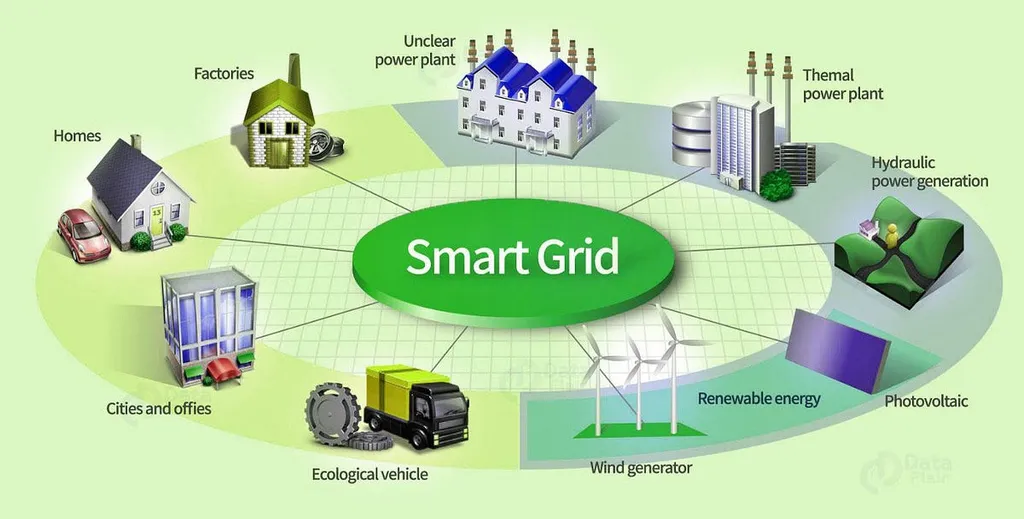
For the energy sector, the integration of SDN into IoT networks could enhance the management of smart grids and other energy infrastructure. Improved routing and resource management could lead to more efficient energy distribution and reduced operational costs. Additionally, enhanced security measures could protect critical energy infrastructure from cyber threats. The practical applications of this research could contribute to the development of more resilient and efficient energy networks.
This article is based on research available at arXiv.