
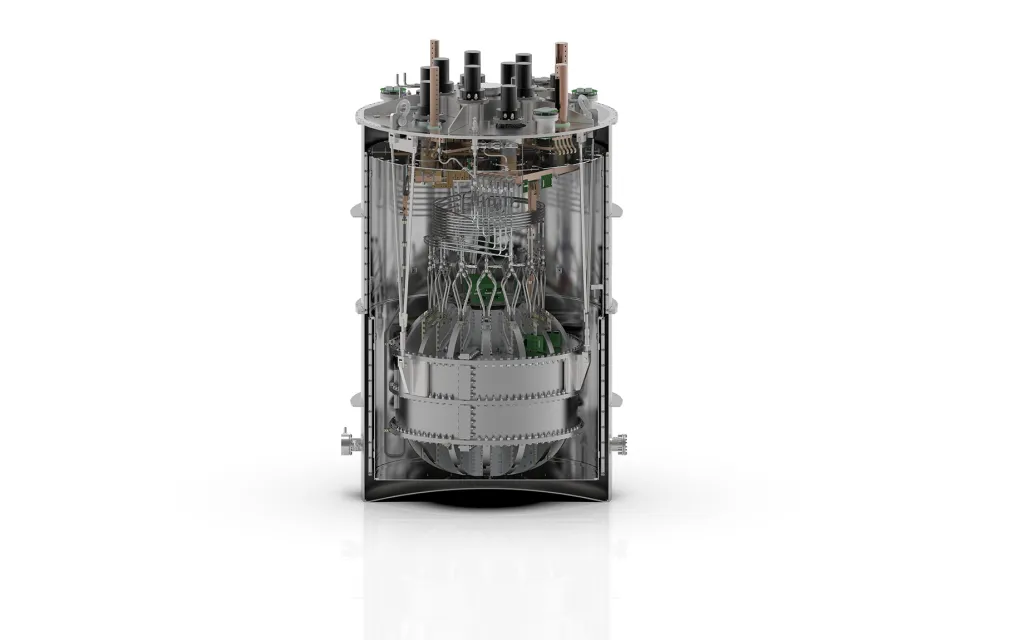
In the realm of energy research, a team of scientists from the Institute for Plasma Research in India has been making strides in the development of high-temperature superconducting magnets. These magnets could potentially revolutionize the design of tokamak reactors, which are devices used in nuclear fusion research. The researchers, led by Upendra Prasad and including Mahesh Ghate, Piyush Raj, and others, have been working on a project to create a compact D-shaped superconducting magnet using REBCO high-temperature superconducting tapes.
The team’s research, published in the journal IEEE Transactions on Applied Superconductivity, focuses on the design, fabrication, and testing of a D-shaped high-temperature superconducting magnet. The goal of this project is to meet the increasing demand for higher fusion power by creating an on-axis high magnetic field. The researchers have conceptualized a toroidal configuration with a major radius of 0.42 meters, consisting of eight D-shaped, four poloidal field, and a central solenoid high-temperature superconducting magnets. This configuration is expected to produce an on-axis toroidal magnetic field of 0.23 Tesla.
The team has successfully demonstrated the fabrication feasibility of a D-shaped coil for this toroidal configuration using stacked high-temperature superconducting cable. They have also reported on the design of a compact D-shaped coil, the fabrication of a long length HTS cable, a winding pack, and its integration with a cryogenic casing and vacuum enclosure. The winding pack terminations, joints, its interfacing with the power supply, and performance testing have also been detailed in their research.
The practical applications of this research for the energy sector are significant. High-temperature superconducting magnets can enable more compact and efficient tokamak reactors, which could lead to more efficient and cost-effective nuclear fusion power generation. This could potentially revolutionize the energy industry by providing a clean, sustainable, and virtually limitless source of energy. However, it’s important to note that while this research represents a significant step forward, there are still many challenges to be overcome before nuclear fusion power becomes a practical reality.
This article is based on research available at arXiv.