
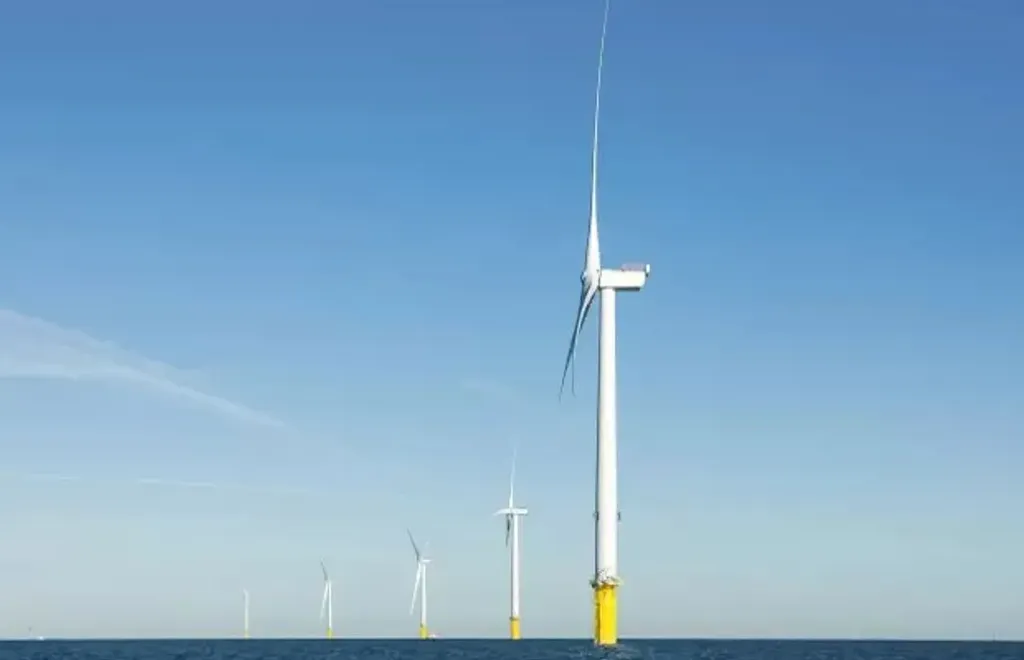
EDF’s decision to scrap the 58.4MW Blyth 2 floating wind farm project off north-east England sends ripples through the UK’s offshore wind sector, raising questions about the future of floating technology and the effectiveness of current market mechanisms.
The project, co-owned with Vantage RE, was consented in 2021 as an extension of the operational 41.5MW Blyth wind farm. However, it has struggled to find a viable route to market, ultimately failing to secure a Contract for Difference (CfD) in the latest allocation round. This leaves Blue Gem Wind’s 100MW Erebus off south Wales and CIP’s 100MW Pentland off north Scotland as the only floating projects to secure CfDs in the UK’s most recent auction.
EDF’s spokesperson stated, “After careful consideration, EDF power solutions UK has made the difficult decision to not progress the Blyth 2 offshore wind farm project.” The company emphasized its ongoing commitment to offshore wind and other renewable technologies, highlighting a pipeline of projects across onshore wind, offshore wind, solar, and battery storage.
The cancellation of Blyth 2 underscores the challenges faced by floating wind projects in the UK. Despite the government’s ambition to deploy 1GW of floating wind by 2030, the sector has yet to gain significant traction. The failure of Blyth 2 to secure a CfD suggests that the current market design may not adequately support the nascent floating wind industry.
This development could prompt a reevaluation of the UK’s floating wind strategy. Industry stakeholders may push for more targeted support mechanisms, such as dedicated CfD pots or enhanced innovation funding, to help floating projects overcome the hurdles of high capital costs and technological uncertainty.
Moreover, the cancellation raises questions about the role of test and demonstration projects in the UK’s energy transition. While such projects are crucial for proving new technologies, their viability depends on clear market signals and stable policy frameworks. The fate of Blyth 2 may serve as a cautionary tale for other developers eyeing the UK’s floating wind sector.
As the UK strives to meet its net-zero targets, the lessons from Blyth 2 will be critical. The government and industry must work together to create an environment where innovative projects can thrive, ensuring that the UK remains at the forefront of the global energy transition.