
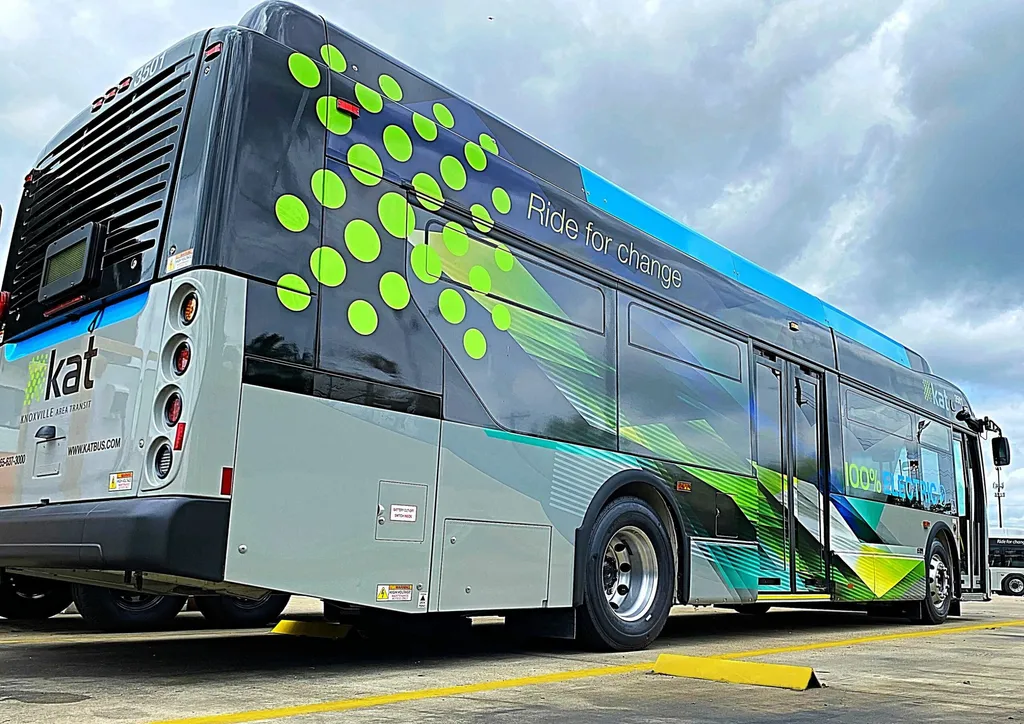
In the quest for sustainable urban transportation, electric buses are increasingly becoming a popular choice for public transit systems. However, managing a mixed fleet of electric and diesel buses presents unique challenges, particularly when it comes to optimizing charging schedules and trip assignments in response to dynamic electricity pricing. A team of researchers from the University of Tennessee, Knoxville, led by Rishav Sen, has developed a comprehensive model to address these challenges and improve the operational efficiency of mixed-fleet transit systems.
The researchers, including Amutheezan Sivagnanam, Aron Laszka, Ayan Mukhopadhyay, and Abhishek Dubey, have presented a mixed-integer linear programming (MILP) model that jointly optimizes charging schedules and trip assignments for mixed fleets. The model takes into account dynamic electricity pricing, vehicle capacity, and route constraints, providing a holistic approach to managing electric and diesel buses. The team recognized that the MILP formulation could become computationally intractable even with relatively small fleets, so they employed a hierarchical approach tailored to the fleet composition to mitigate this issue.
Using real-world data from the city of Chattanooga, Tennessee, the researchers demonstrated that their approach could result in significant savings in the operating costs of mixed transit fleets. The study highlights the potential for transit agencies to optimize their operations by leveraging advanced optimization techniques and real-time data. This research was published in the journal Transportation Research Part C: Emerging Technologies, offering valuable insights for the energy and transportation sectors.
The practical applications of this research are significant for the energy industry. By optimizing charging schedules in response to dynamic electricity pricing, transit agencies can reduce their operating costs and contribute to a more stable and efficient electricity grid. Moreover, the hierarchical approach proposed by the researchers can be applied to other sectors with similar optimization challenges, such as logistics and supply chain management. As the world continues to transition towards sustainable energy solutions, the insights gained from this research will be invaluable in shaping the future of urban transportation and energy management.
This article is based on research available at arXiv.