
In the realm of energy and environmental science, understanding the molecular composition of interstellar space can provide valuable insights into the origins of organic compounds and their potential applications on Earth. A team of researchers from various institutions, including the University of Paris-Saclay, the University of Bologna, and the Max Planck Institute for Radio Astronomy, has recently delved into the vibrational modes of cyclopentadiene, a cyclic hydrocarbon molecule detected in space. Their work, published in the Journal of Molecular Spectroscopy, offers a new method to analyze the spectroscopic fingerprints of such molecules, which could have practical implications for energy and environmental research.
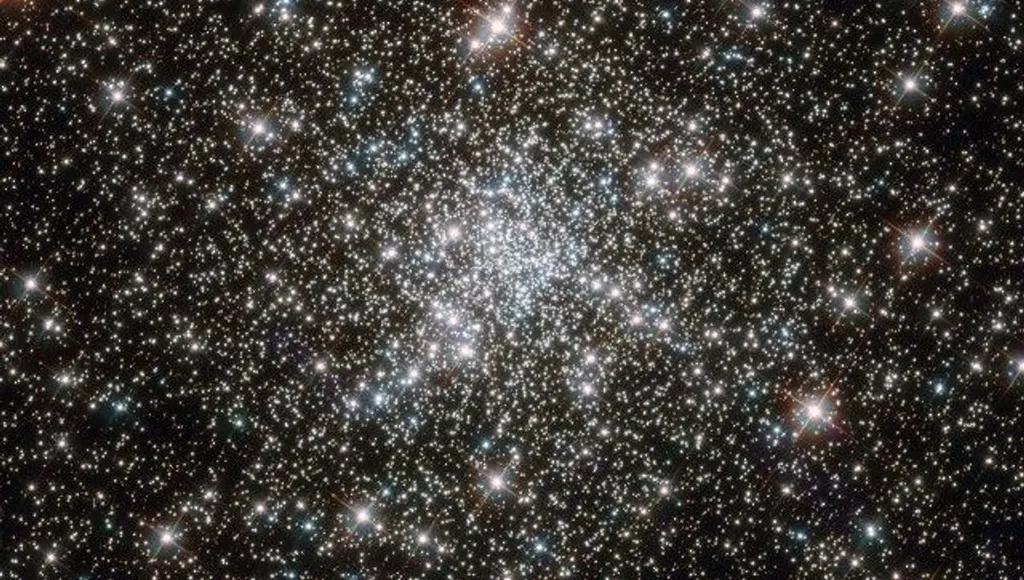
Cyclopentadiene, a five-membered carbon-hydrogen ring, has been observed in the cold core of the Taurus Molecular Cloud, a region of space known for its rich chemistry. The researchers, led by Luis Bonah and Marie-Aline Martin-Drumel, used high-resolution infrared spectroscopy to study the vibrational modes of this molecule. They employed a technique called the Automated Spectral Assignment Procedure (ASAP) to simplify the analysis of the complex rovibrational spectra.
The ASAP method is particularly useful when the rotational spectrum of either the upper or lower vibrational state is known with high accuracy. In this study, the researchers used a new implementation of ASAP to analyze the rovibrational spectrum of the ν21 fundamental mode of cyclopentadiene, which occurs at a wavenumber of 961 cm-1. They also extended the ASAP method to a technique called ASAP2, which is used for rovibrational bands where the rotational structures of both the lower and upper states are known. This allowed them to determine the vibrational energies of eight vibrational modes below 860 cm-1.
The high-resolution spectra were recorded using the synchrotron radiation extracted by the AILES beamline of the SOLEIL facility, a powerful tool for studying the infrared spectra of molecules. The results of this study agree with previous findings from pure rotational spectroscopy, demonstrating the efficiency and reliability of the new ASAP implementation.
So, what does this mean for the energy industry? Understanding the spectroscopic fingerprints of molecules like cyclopentadiene can help scientists trace the origins of organic compounds in space and on Earth. This knowledge can be applied to the development of new energy technologies, such as catalysts for converting carbon dioxide into useful fuels. Additionally, the ASAP method developed in this study can be used to analyze the spectra of other molecules relevant to energy and environmental research, providing a powerful tool for future studies.
This article is based on research available at arXiv.