
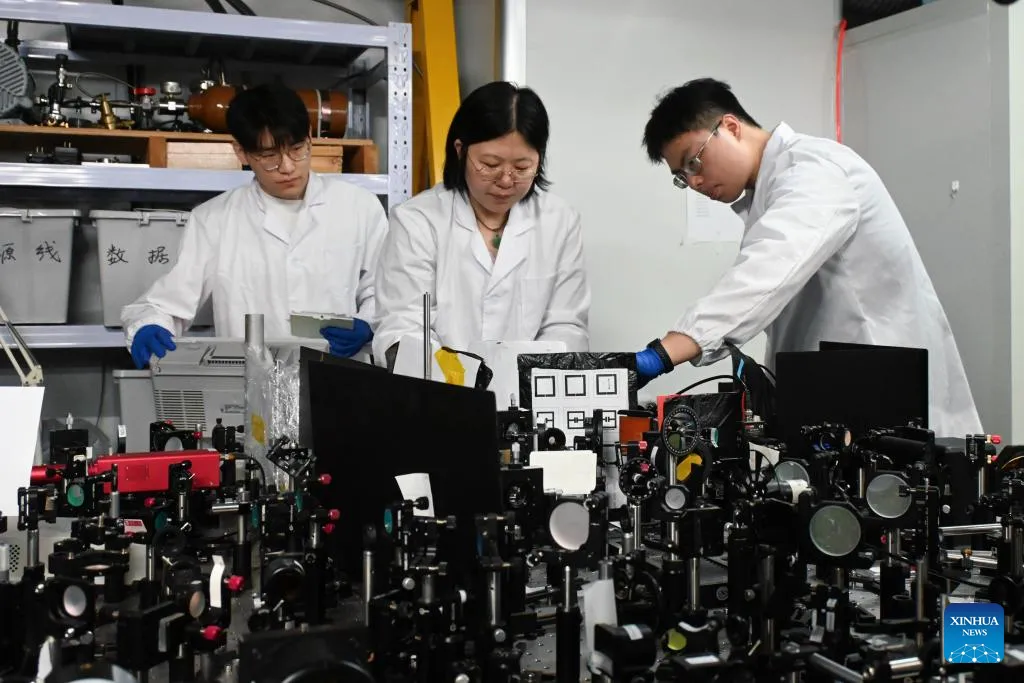
Researchers from the University of Chinese Academy of Sciences, led by Tan Liu and Qiegen Liu, have developed a new approach to improve the quality of images produced by computed laminography (CL), a crucial non-destructive testing technology used in the energy sector and beyond. Their work, titled “LaminoDiff: Artifact-Free Computed Laminography in Non-Destructive Testing via Diffusion Model,” was recently published in the journal IEEE Transactions on Industrial Electronics.
Computed laminography is widely used to inspect the internal structures of large, flat objects, such as solar panels, circuit boards, and other electronic components. However, the scanning geometry of CL often results in inter-layer aliasing artifacts, which can obscure important details and limit the practical application of this technology. While deep learning has shown promise in removing these artifacts, the effectiveness of these methods is often hindered by the domain gap between synthetic data used for training and real-world data.
To address this challenge, the researchers developed LaminoDiff, a framework that integrates a diffusion model with a high-fidelity prior representation. This prior is generated using a dual-modal CT-CL fusion strategy, which combines information from both computed tomography (CT) and CL scans. By integrating this prior into the network as a conditional constraint, LaminoDiff ensures high-precision preservation of structural details while suppressing artifacts.
The researchers tested LaminoDiff on both simulated and real printed circuit board (PCB) datasets. The results demonstrated that LaminoDiff achieves high-fidelity reconstruction with competitive performance in artifact suppression and detail recovery. Moreover, the improved image quality facilitated reliable automated defect recognition, which is crucial for quality control in the energy sector and other industries.
This research highlights the potential of advanced machine learning techniques to enhance the capabilities of non-destructive testing technologies. By improving the quality of images produced by CL, LaminoDiff can help energy companies and other industries to more accurately inspect and maintain their equipment, ultimately leading to improved safety and efficiency. The research was published in the IEEE Transactions on Industrial Electronics, a prestigious journal covering the fields of industrial electronics and applications.
This article is based on research available at arXiv.