
Researchers from the Beijing University of Posts and Telecommunications, including Hao Wu, Shengtian Yang, Huiguo Gao, Diao Wang, Jun Chen, and Guanding Yu, have published a study on improving power control for energy harvesting communications in wireless networks. Their work, titled “Clipped Affine Policy: Low-Complexity Near-Optimal Online Power Control for Energy Harvesting Communications over Fading Channels,” was published in the IEEE Transactions on Wireless Communications.
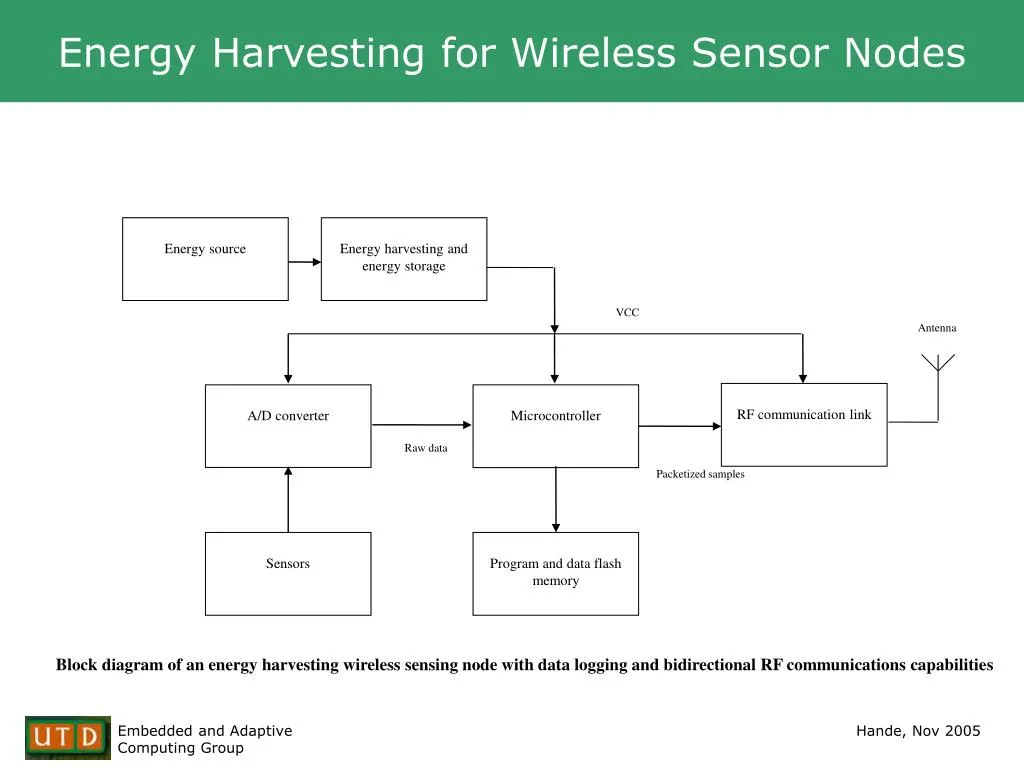
The study focuses on developing efficient power control strategies for wireless communication systems that rely on energy harvesting, such as those powered by solar or wind energy. These systems face unique challenges due to the intermittent nature of harvested energy and the variability of wireless channels, known as fading. The researchers aimed to create a practical solution that balances computational complexity and performance.
The team derived a linear-policy-based approximation for the relative-value function in the Bellman equation, a fundamental concept in dynamic programming used to solve sequential decision-making problems. This approximation led to the development of two key power control policies: optimistic and robust clipped affine policies. Both policies take the form of a clipped affine function, which is a simple mathematical function that adjusts power levels based on the battery level and the reciprocal of the channel signal-to-noise ratio coefficient. These policies are designed to operate between adjacent time slots, making them suitable for real-time applications.
To further enhance the performance of these policies, the researchers proposed a domain-knowledge-enhanced reinforcement learning (RL) algorithm. Reinforcement learning is a type of machine learning where an agent learns to make decisions by interacting with an environment. By incorporating domain knowledge, the algorithm can learn more efficiently and effectively. The proposed approach was also extended to scenarios where there is some lookahead information about energy availability or channel conditions.
The researchers conducted comprehensive simulations to evaluate their methods. The results showed that the proposed policies achieve a good balance between computational complexity and optimality. Notably, the robust clipped affine policy, when combined with RL and using at most five parameters, outperformed all existing approaches across various scenarios. It achieved this performance with less than 2% performance loss relative to the optimal policy.
For the energy sector, this research offers practical applications in improving the efficiency and reliability of wireless communication systems that rely on renewable energy sources. By optimizing power control strategies, these systems can better manage their energy resources and maintain stable communication links, even in the face of varying channel conditions and intermittent energy availability. This can be particularly beneficial for remote monitoring, smart grids, and other energy-related applications that depend on robust and efficient wireless communication.
This article is based on research available at arXiv.