
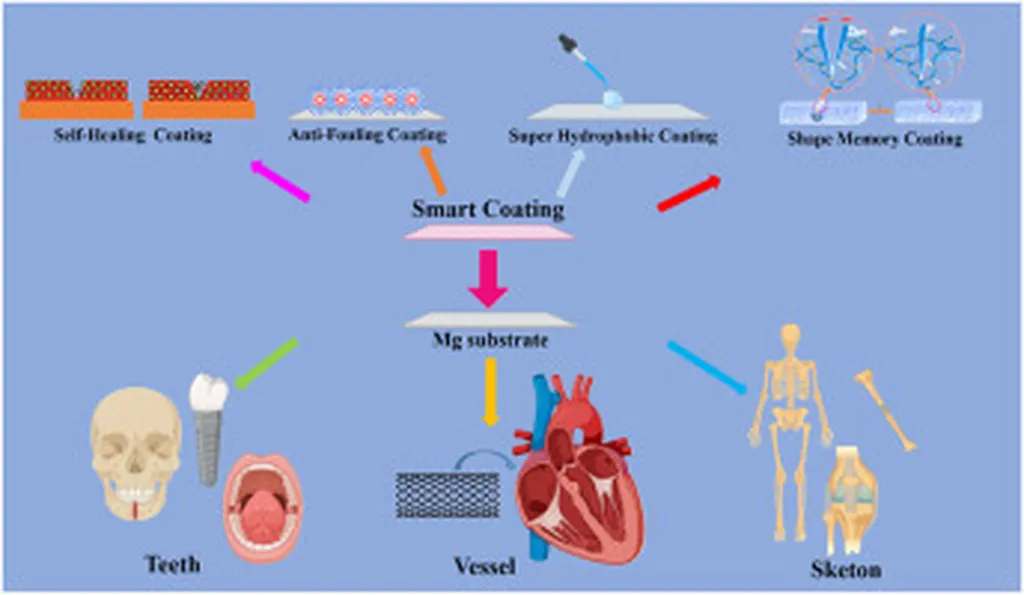
Researchers from the Department of Physics and Astronomy at Uppsala University in Sweden have recently published a study in the journal Corrosion Science, exploring the potential of amino acids to improve the biocompatibility and corrosion resistance of magnesium (Mg) and its alloys. The team, led by John Bolin and including Amanda Goold, Olof Hildeberg, Alva Limbäck, and Elsebeth Schröder, focused on understanding how amino acids interact with Mg surfaces at the atomic level.
Magnesium is an attractive material for biodegradable implants due to its mechanical properties similar to bone and its role in human metabolism. However, its rapid corrosion rate in the body has limited its use. To address this, the researchers investigated the adsorption of glycine, L-proline, and L-hydroxyproline (Hyp) on Mg surfaces using density functional theory (DFT). These amino acids were chosen for their prevalence in collagen, a major component of connective tissues in the body.
The study found that the carboxyl group of Hyp binds strongly to the Mg(0001) surface, suggesting that Hyp could be an effective coating molecule for enhancing the biocompatibility of Mg implants. The researchers also examined how the binding of Hyp’s functional groups is affected when Mg is alloyed with small amounts of zinc, lithium, or aluminum. They discovered that alloying can modulate the binding strength, which could be useful for fine-tuning the corrosion resistance of Mg-based implants.
Furthermore, the team modeled the immersion of the systems in a water environment to simulate the conditions within the human body. They found that the presence of water can influence the binding of amino acids to the Mg surface, highlighting the importance of considering the physiological environment when designing biocompatible coatings.
The practical applications of this research for the energy sector are indirect but noteworthy. The insights gained from this study could inspire the development of new coating strategies for Mg-based materials used in energy storage and conversion devices, such as batteries and hydrogen storage systems. By improving the corrosion resistance and biocompatibility of Mg, these findings could contribute to the advancement of sustainable and efficient energy technologies.
This article is based on research available at arXiv.