
In the realm of energy and particle physics, a team of researchers from the University of Baghdad, including Faeq Abed, Asmaa AlMellah, Kareem Al-Jubouri, and Alex Lumoski, has been exploring innovative strategies to enhance the sensitivity of dark matter detection experiments. Their work, published in the journal Physical Review D, focuses on improving the ability to detect low-energy interactions, which could have significant implications for the energy sector, particularly in understanding and harnessing dark matter.
The researchers investigated novel approaches to extend the sensitivity of dark matter direct detection experiments to energy deposits well below the thresholds of conventional detectors. One of their key strategies involves the use of liquid-argon time-projection chambers equipped with silicon photomultipliers (SiPMs). By improving the optical readout and applying a nuclear dielectric constant (NDC) correction to the WIMP (Weakly Interacting Massive Particles) nucleus interaction, they demonstrated an enhanced response to low-momentum-transfer nuclear recoils. The NDC correction effectively amplifies the interaction strength at small recoil energies, increasing the expected ionization and scintillation yields without altering the high-energy behavior constrained by calibration data. This mechanism, when combined with SiPM-based light collection, lowers the effective detection threshold to the subKeV regime, significantly improving sensitivity to low-mass WIMPs and other weakly interacting particles.
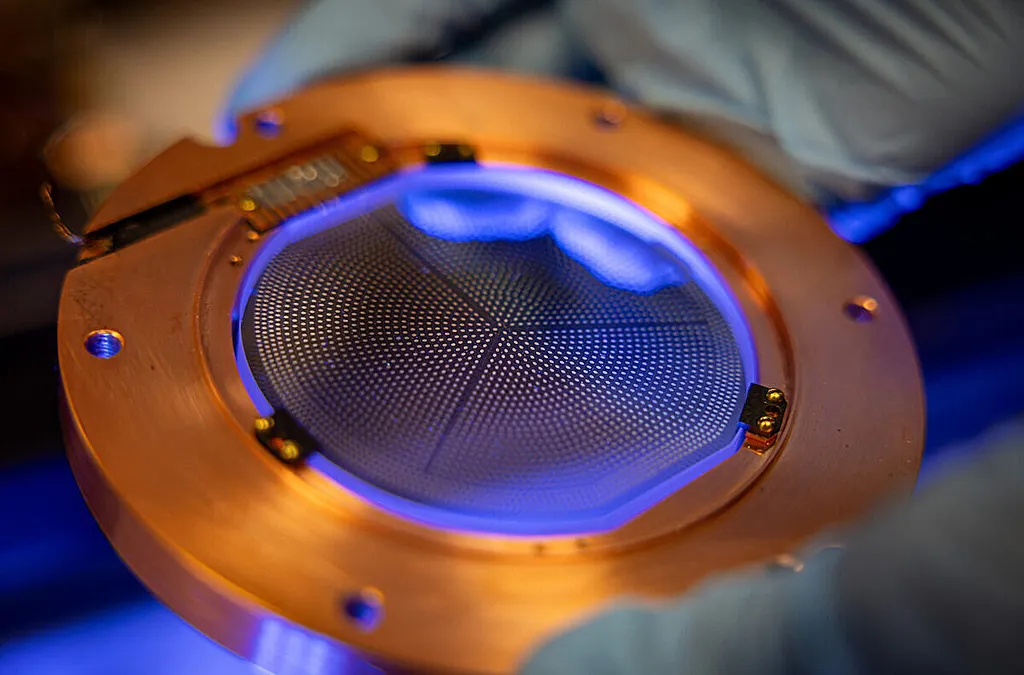
In addition to their work with liquid argon detectors, the researchers presented the design and projected performance of a qubit-based detector optimized for ultra-low-energy depositions. This novel two-chip architecture minimizes signal dissipation, while quantum parity measurements enable enhanced single-phonon sensitivity. Full simulations of phonon propagation and quasiparticle dynamics showed that energy deposits at the level of approximately 30 meV can be detected with nearly unit efficiency and high energy resolution. This capability is expected to advance sensitivity to dark-matter scattering for masses greater than 0.01 MeV by several orders of magnitude for both light and heavy mediators. Furthermore, it enables competitive searches for axion and dark-photon absorption in the 0.04 to 0.2 eV mass range.
The practical applications of this research for the energy sector are manifold. Enhanced dark matter detection capabilities could lead to a better understanding of the fundamental constituents of the universe and their interactions. This knowledge could inform the development of new energy technologies, such as advanced nuclear reactors or dark matter-powered energy sources, although such applications are still speculative and far from immediate implementation. For now, the focus remains on advancing our fundamental understanding of dark matter and its potential role in the energy landscape.
The researchers’ work represents a significant step forward in the quest to detect and understand dark matter. By pushing the boundaries of detection technology, they are opening new avenues for exploration that could ultimately revolutionize our approach to energy production and utilization. As the field continues to evolve, the insights gained from these experiments will be crucial in shaping the future of energy research and development.
This article is based on research available at arXiv.