
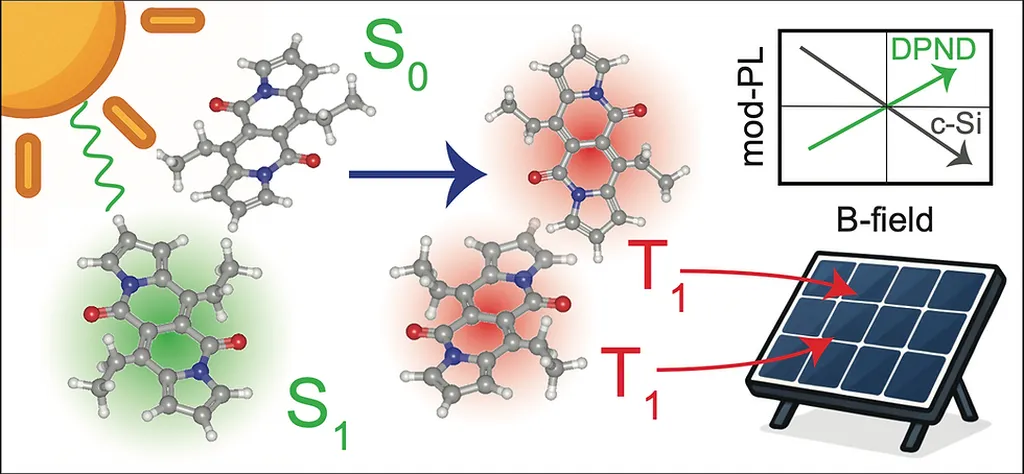
A landmark achievement in photovoltaic research has emerged this week, as scientists announced a breakthrough in singlet-fission technology—enabling organic solar cells to produce twice the number of electrons from a single high-energy photon. This innovation, revealed in early January 2026, could redefine the limits of solar energy efficiency and accelerate the global transition to renewable power.
Singlet fission is a process where a single photon generates two electron-hole pairs, effectively doubling the electrical output from sunlight. Until now, this phenomenon has been observed in specialized materials under controlled laboratory conditions, but practical deployment in commercial solar cells remained elusive. The latest research, however, demonstrates stable and efficient singlet fission in organic photovoltaic materials, paving the way for next-generation solar panels that could surpass the theoretical efficiency limits of traditional silicon-based cells.
“This is a game-changer for solar energy,” said a lead researcher involved in the project. “By harnessing singlet fission, we can break through the Shockley-Queisser limit, which has constrained solar cell efficiency for decades. This means more power from the same sunlight, at a lower cost, and with greater flexibility in where and how we deploy solar technology.”
The implications are profound. Current silicon solar cells max out at around 29% efficiency, but singlet-fission-enhanced cells could push that beyond 40%, making solar power even more competitive with fossil fuels. Moreover, organic materials can be manufactured using low-cost, scalable processes, opening doors for solar integration into building facades, vehicles, and even wearable electronics.
This breakthrough arrives as global solar installations surpass 1.5 terawatts, with prices plummeting by nearly 90% over the past decade. The combination of higher efficiency and lower costs could further disrupt energy markets, particularly in regions where grid infrastructure is limited or unreliable. As the International Energy Agency projects solar to lead new capacity additions by 2030, innovations like singlet fission will be critical in meeting ambitious net-zero targets.
For policymakers and industry leaders, the message is clear: the future of solar is not just about scaling up, but about leaping forward. Investments in advanced photovoltaic research and manufacturing will be essential to capitalize on this new frontier. The race to commercialize singlet-fission solar cells is on, and the winners will shape the energy landscape for decades to come.