
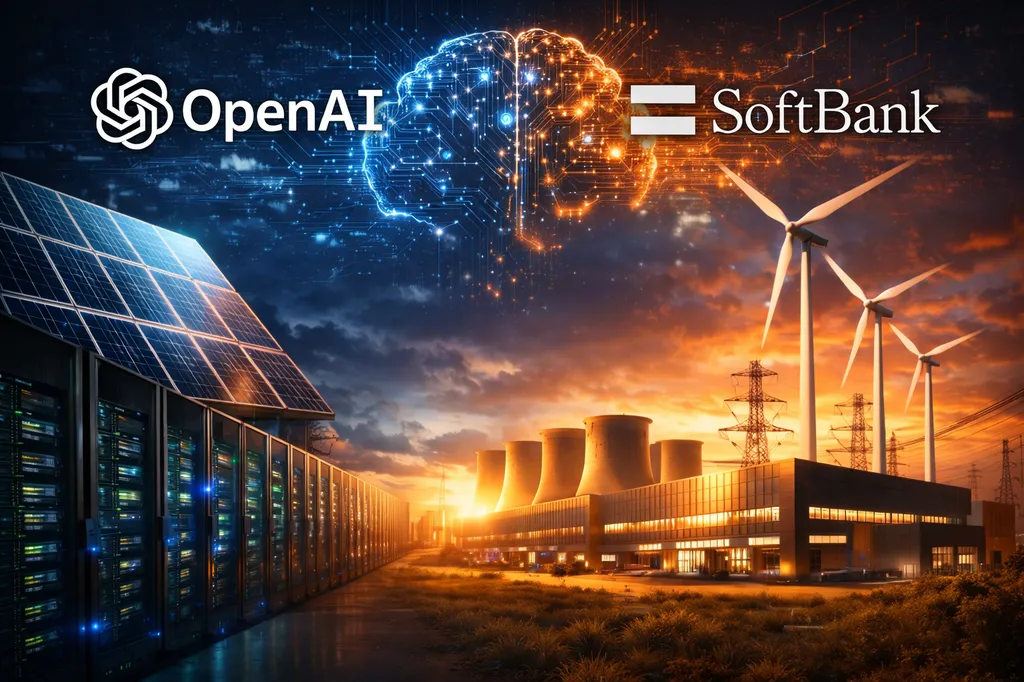
OpenAI and SoftBank Group’s $1 billion investment in SB Energy marks a significant shift in the tech and energy sectors, underscoring the inextricable link between artificial intelligence and power infrastructure. This strategic move is not just about funding; it’s about securing the physical and energetic foundations required to support AI’s insatiable appetite for electricity.
The investment comes as AI systems, particularly large language models, demand unprecedented amounts of power. Traditional data centers already consume vast quantities of electricity, and AI’s rapid growth is accelerating this trend. Tech companies are increasingly recognizing that to meet these demands, they must invest directly in power generation and energy infrastructure, rather than relying solely on third-party cloud providers.
SB Energy, originally founded by SoftBank to develop renewable energy and storage projects, has expanded its focus to include data-center development and operation. The company’s plans to build a 1.2 gigawatt data center campus in Milam County, Texas, exemplify this shift. This facility, part of the larger Stargate initiative, is designed to support AI training and inference workloads at a scale that conventional cloud platforms struggle to match.
The Stargate initiative, backed by OpenAI, SoftBank, Oracle, and other partners, aims to establish a nationwide network of AI data hubs powered by renewable energy. With initial commitments of $100 billion and plans to scale towards $500 billion, Stargate represents a monumental effort to future-proof AI infrastructure.
SoftBank’s role in this investment is particularly noteworthy. The company, chaired by Masayoshi Son, has positioned SB Energy as a critical player in the intersection of power generation and data-intensive computing. SoftBank’s commitment to AI ventures, including OpenAI, solidifies its strategic relationship with the AI pioneer. SB Energy will not only build key facilities for OpenAI but will also become a customer of OpenAI’s AI services, integrating tools like ChatGPT for internal operations.
This deal highlights a broader industry trend: tech giants are engaged in an infrastructure arms race, scrambling to secure the data and power capacity needed to sustain the next wave of AI innovation. Companies like Meta and Google have announced similar investments in energy and computing capacity, often emphasizing renewable sources to offset the environmental impact of AI workloads.
For OpenAI, this funding supports a strategy of owning or co-owning parts of its deployment stack, helping insulate its operations from capacity shortages and price volatility in commercial cloud markets. The investment underscores how deeply energy and compute are intertwined in the future of AI technology.
The implications for markets are profound. The growing recognition of AI’s power demands is likely to drive increased investment in renewable energy and advanced data-center design. This could accelerate the development of green energy technologies and infrastructure, creating new opportunities for innovation and growth. Additionally, the trend towards tech companies investing directly in power generation and energy infrastructure could reshape the energy market, increasing competition and potentially leading to more sustainable and resilient energy systems.
Moreover, the integration of AI tools into the operations of energy companies like SB Energy could enhance efficiency and productivity, further driving the demand for AI technologies. This symbiotic relationship between AI and energy could create a virtuous cycle of innovation and investment, benefiting both sectors.
In conclusion, OpenAI and SoftBank’s investment in SB Energy is a harbinger of things to come. As AI continues to evolve, the demand for power and data-center capacity will only grow. Tech companies and energy providers that recognize and act on this trend will be well-positioned to shape the future of both industries. The investment underscores the need for a holistic approach to AI development, one that considers not just the technological advancements but also the physical and energetic requirements that underpin them.