
In the realm of energy research, a team of scientists from the University of Edinburgh, led by Professor Graeme J. Ackland, and the University of Bayreuth, led by Professor Eugene Gregoryanz, has made a significant observation in the behavior of dense hydrogen and its isotopes. Their findings, published in the journal Nature Communications, shed new light on the unique properties of hydrogen under extreme conditions, which could have implications for energy storage and materials science.
The researchers conducted Raman measurements on dense hydrogen (H2), deuterium (D2), and a mixture of both, across a wide range of pressures and temperatures. They discovered a unique type of rotational excitation, denoted as ΔJ=0, which behaves differently from the commonly understood harmonic oscillator and quantum rotor models.
In the gas or fluid state, this ΔJ=0 excitation has zero Raman shift, meaning it doesn’t absorb or emit any energy. However, when hydrogen transitions to a solid state under high pressure, the crystal field causes this excitation to shift away from zero. For instance, at around 50 GPa and 10 K, the shift is approximately 75 cm-1 for both isotopes and their mixture.
Interestingly, the researchers found that the frequencies of the ΔJ=0 transition for hydrogen and deuterium do not scale as expected for rotational or vibrational modes. Instead, they appear to be completely isotope independent, marking this transition as fundamentally different from other known excitations.
In deuterium, the ΔJ=0 mode splits upon entering phase II, suggesting a complex molecular environment in the broken symmetry phase. This observation could provide insights into the behavior of hydrogen under extreme conditions, which is crucial for understanding its potential as an energy carrier and for developing advanced materials.
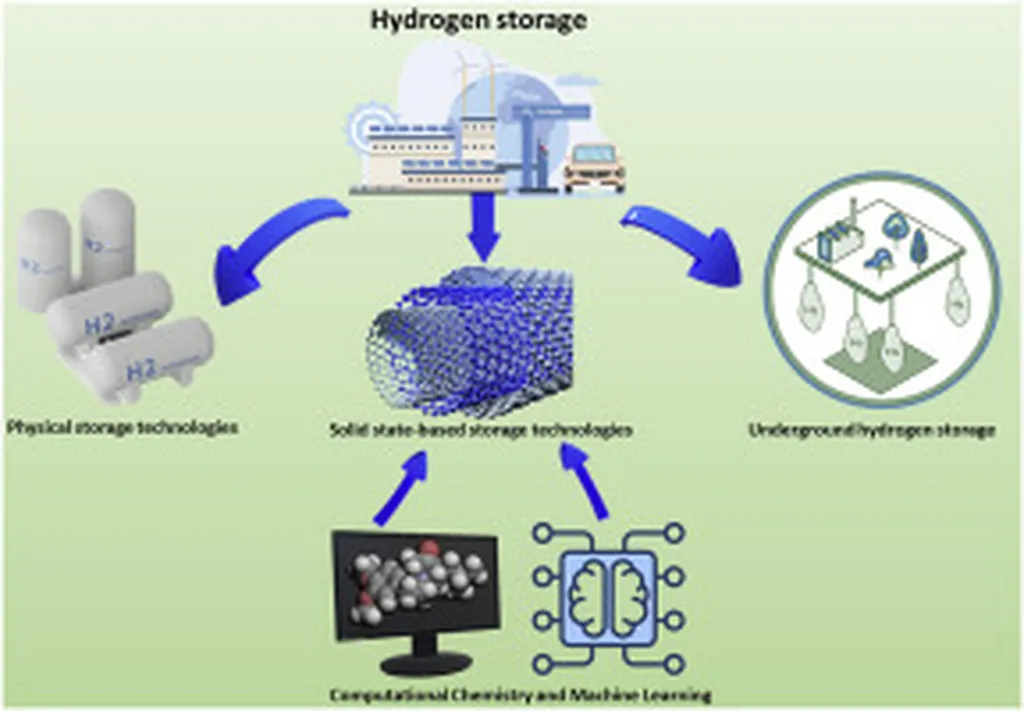
The practical applications of this research for the energy sector are still under exploration. However, understanding the unique properties of hydrogen under pressure can contribute to the development of more efficient hydrogen storage solutions, which are essential for the widespread adoption of hydrogen as a clean energy source. Additionally, the insights gained from this study could inform the design of materials that can withstand extreme conditions, which is relevant for various energy technologies, including nuclear fusion and advanced power generation systems.
In conclusion, this research highlights the importance of fundamental scientific investigations in driving technological advancements in the energy sector. By unraveling the complex behavior of hydrogen under pressure, scientists are paving the way for innovative solutions to global energy challenges.
This article is based on research available at arXiv.