
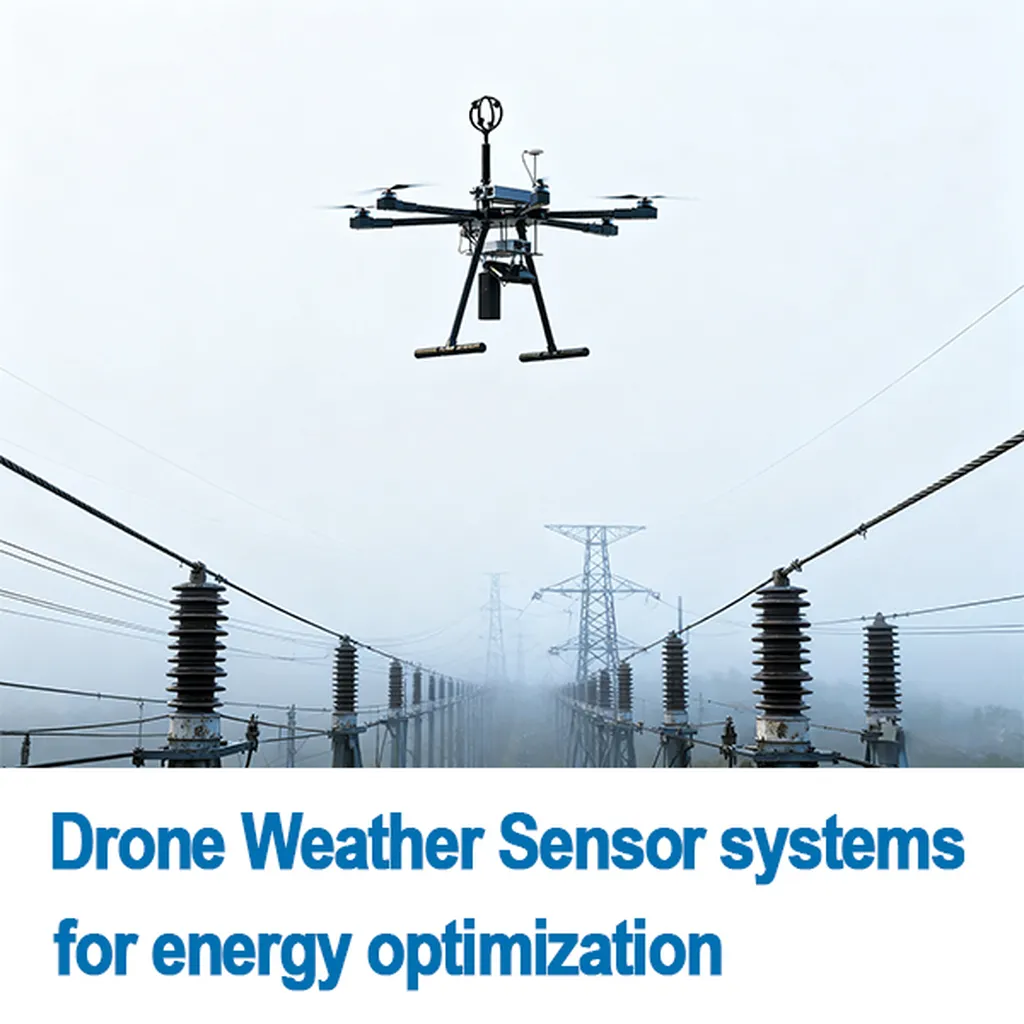
Researchers from the American University in Cairo, including Kamal Mohamed, Lillian Wassim, Ali Hamdi, and Khaled Shaban, have developed a novel approach to improve the efficiency and safety of drone operations in the energy sector. Their work focuses on real-time route optimization for Drone-as-a-Service (DaaS) operations, addressing the limitations of traditional path-planning algorithms in dynamic environments.
The team’s research introduces a weather-aware deep learning framework that accelerates route prediction for drones. Classical algorithms like A* and Dijkstra, while optimal, are computationally complex and struggle to keep up with real-time demands in changing environments. To overcome this, the researchers trained machine learning and deep learning models using synthetic datasets generated from simulations of classical algorithms. This approach allows for faster decision-making while maintaining route optimization performance.
The framework incorporates transformer-based and attention-based architectures that consider meteorological conditions affecting drone operations. Attention mechanisms dynamically weight environmental factors such as wind patterns, wind bearing, and temperature to enhance routing decisions, even in adverse weather conditions. The transformer-based architectures, in particular, showed superior adaptation to dynamic environmental constraints.
The practical applications for the energy sector are significant. Drones are increasingly used for tasks such as inspecting power lines, monitoring renewable energy sites, and assessing infrastructure damage after natural disasters. Real-time, weather-responsive route optimization can enhance the efficiency and safety of these operations, reducing downtime and improving overall productivity. For example, drones equipped with this technology can more effectively navigate around severe weather conditions, ensuring timely inspections and maintenance.
The researchers’ experimental results demonstrate that their weather-aware models achieve substantial computational speedups over traditional algorithms while maintaining route optimization performance. This advancement represents a substantial step forward in the efficiency and safety of autonomous drone systems, with direct benefits for the energy industry.
The research was published in the IEEE Internet of Things Journal, a reputable source for cutting-edge developments in IoT and related technologies.
This article is based on research available at arXiv.