
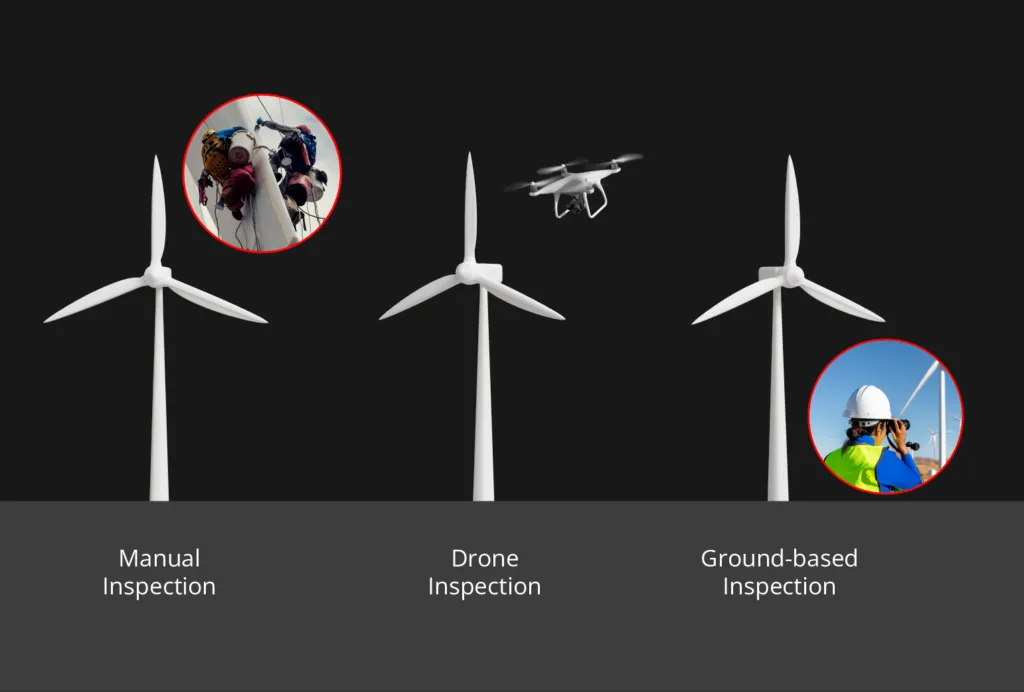
Researchers from the Technical University of Denmark, including Raül Pérez-Gonzalo, Riccardo Magro, Andreas Espersen, and Antonio Agudo, have developed a new approach to improve the automation of wind turbine inspections. Their work focuses on accurately segmenting wind turbine blades from visual data, a crucial step in identifying surface damages that can affect performance and energy output.
The team’s research addresses a significant challenge in the energy industry: maintaining the reliability and efficiency of wind turbines. Regular inspections are essential, as even minor damages can lead to reduced energy production and increased wear. However, traditional methods of segmentation, which rely on deep learning models, require extensive annotated datasets, making them less scalable.
The researchers introduced a new, annotation-efficient approach that transforms the pixel-level segmentation task into a binary region classification problem. This method uses a fully unsupervised Modular Adaptive Region Growing technique, guided by image-specific Adaptive Thresholding and enhanced by a Region Merging process. This approach generates coherent segments from fragmented areas, improving the accuracy of blade segmentation.
To further enhance the robustness and generalization of their framework, the team developed RegionMix, an augmentation strategy that synthesizes new training samples by combining distinct regions. This innovation helps the model perform consistently across different wind farms, regardless of varying conditions.
The researchers demonstrated that their framework achieves state-of-the-art segmentation accuracy. This advancement could significantly improve the automation of wind turbine inspections, making the process more efficient and scalable. By identifying damages earlier and more accurately, wind farm operators can maintain optimal performance and maximize energy output.
The research was published in the journal IEEE Transactions on Industrial Electronics, a reputable source for advancements in industrial electronics and applications. This work highlights the potential of innovative technologies to address practical challenges in the energy sector, contributing to more sustainable and efficient energy production.
This article is based on research available at arXiv.