
In the realm of energy and communication technologies, a team of researchers from various institutions, including Nanyang Technological University, Singapore, and Ho Chi Minh City University of Technology and Education, Vietnam, has delved into the complexities of resource management in satellite networks. Their work, published in the IEEE Internet of Things Journal, offers a comprehensive survey of incentive mechanisms designed to optimize resource allocation in these networks.
Satellite networks present unique challenges due to their high mobility, extensive coverage, and long propagation distances. Traditional approaches to resource allocation often rely on rigid system performance metrics, overlooking the economic and behavioral aspects of human users. The researchers highlight that incentive mechanisms, rooted in game theory and auction theory, provide a more holistic approach by considering the rationality and behavior of users. This perspective aims to improve scalability, adaptability, and fairness in resource allocation.
The survey covers key issues in satellite networks, including communication resource allocation, computation offloading, privacy and security, and coordination. By integrating economic incentives, these mechanisms can better align the interests of all system entities, ensuring that benefits and utility are maximized across the network. This approach is particularly relevant to the energy sector, where efficient resource management is crucial for optimizing performance and reducing costs.
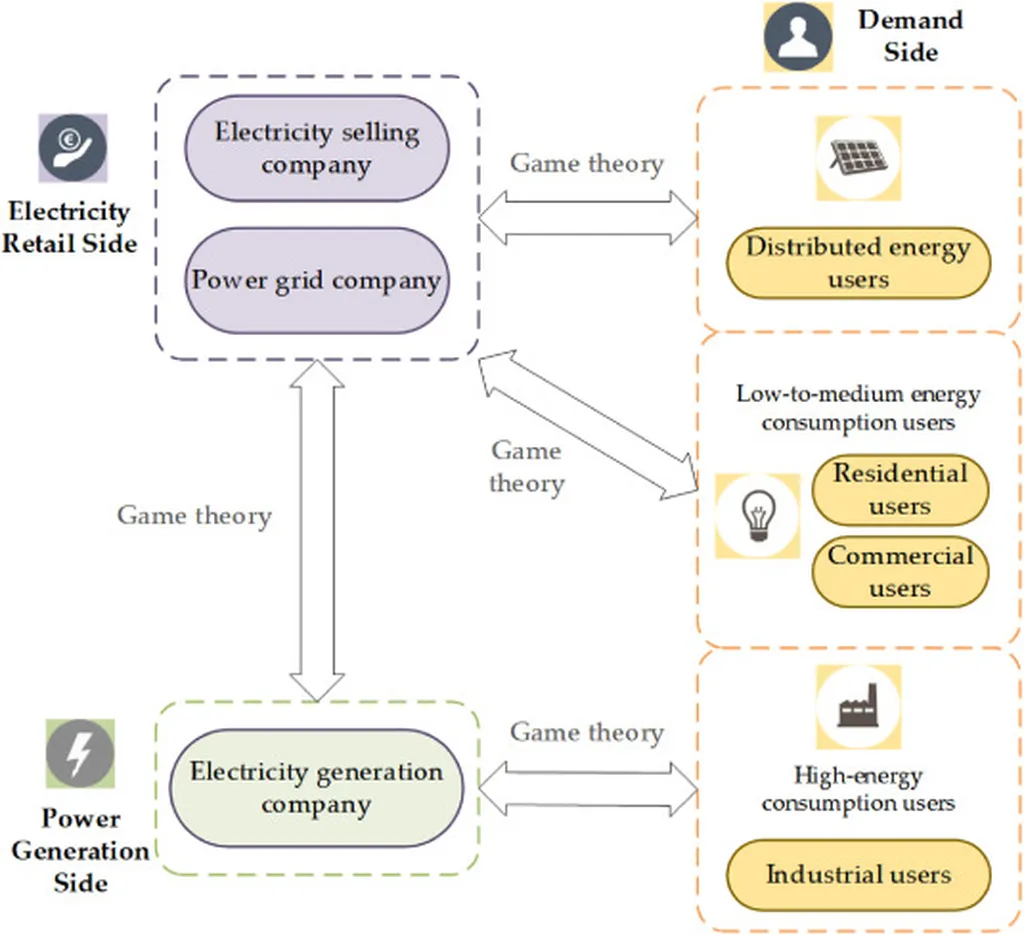
One of the practical applications for the energy sector lies in the management of energy resources in smart grids. Incentive mechanisms can be used to encourage energy consumers to adjust their usage patterns during peak times, thereby reducing the strain on the grid and improving overall efficiency. Similarly, in the context of satellite networks, these mechanisms can help manage communication and computation resources more effectively, ensuring that all users have access to the necessary resources while minimizing waste.
The researchers also outline future research directions, including learning-based mechanism design for satellite networks. This area of study could further enhance the adaptability and efficiency of resource management systems, providing valuable insights for the energy sector as well. By leveraging machine learning algorithms, these systems could dynamically adjust to changing conditions, optimizing resource allocation in real-time.
In conclusion, the work of Nguyen Cong Luong and his colleagues offers a valuable perspective on the challenges and opportunities in resource management for satellite networks. Their findings have significant implications for the energy sector, where efficient resource management is essential for optimizing performance and reducing costs. As the demand for energy and communication resources continues to grow, the development of advanced incentive mechanisms will play a crucial role in meeting these challenges.
This article is based on research available at arXiv.