
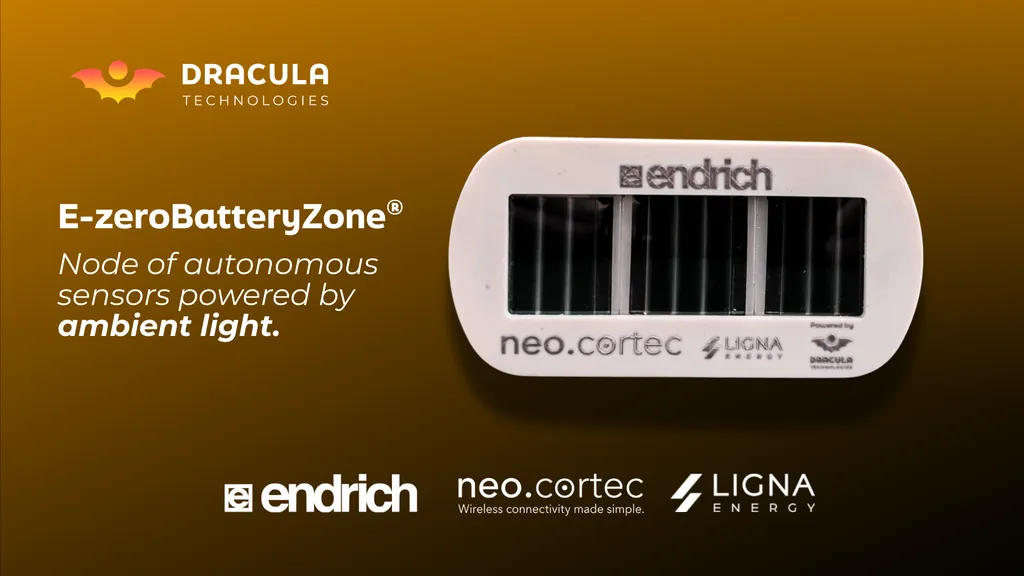
Researchers from the Universidad de Antioquia in Colombia have developed a novel wireless communication node for the Internet of Things (IoT) that operates without batteries, harnessing ambient light for both power and data reception. The team, led by Juan F. Gutierrez and including Nhung Nguyen, Jesus M. Quintero, and Andres Gomez, has designed a system that could potentially simplify and reduce the cost of deploying IoT devices in energy-harvesting applications.
The researchers have created a batteryless wireless communication node that uses a solar panel to serve two main functions: energy harvesting and visible light communication (VLC). The solar panel captures modulated signals from LED light sources, which are then filtered and digitized by a lightweight analog front-end. An 8-bit low-power processor manages the system’s operational states based on the stored energy levels, activating the main processor only when necessary to minimize energy consumption. Data reception is synchronized with the harvester’s open-circuit phase to reduce interference and improve signal quality.
The prototype developed by the team reliably decodes 32-bit VLC frames at 800 Hertz, consuming less than 2.8 milliJoules of energy. In sleep mode, the system maintains power consumption below 30 microWatts. This innovative approach could have practical applications in the energy sector, particularly in remote or hard-to-reach areas where traditional power sources are not feasible. For instance, these batteryless nodes could be used to monitor energy infrastructure, such as pipelines or power lines, providing real-time data without the need for frequent battery replacements or maintenance.
The research was published in the journal IEEE Internet of Things Journal, a reputable source for advancements in IoT technology. This development highlights the potential of integrating energy-harvesting technologies with wireless communication systems, paving the way for more sustainable and efficient IoT applications in the energy industry.
This article is based on research available at arXiv.