
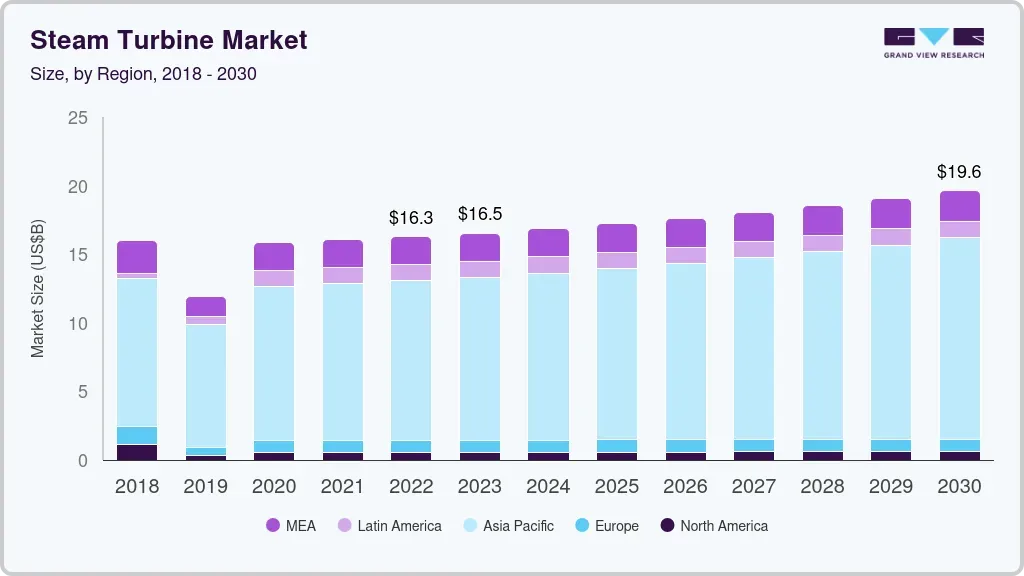
The steam turbine market is on a steady growth trajectory, with a projected CAGR of 3.14% from 2025 to 2030, according to the recent “Steam Turbine Market Research Report 2025-2030” added to ResearchAndMarkets.com’s offering. This growth, from USD 19.50 billion in 2024 to USD 23.48 billion by 2030, is driven by a complex interplay of factors that are reshaping the energy landscape.
The market’s expansion is underpinned by rising electricity demand, particularly in Asia and Africa, where population growth, industrialization, and urbanization are accelerating. Steam turbines, crucial for thermal power plants, are meeting this demand with efficient, high-capacity units that ensure grid stability. Manufacturers are developing reliable models to power industries, homes, and smart cities, spurring innovation and market growth.
Modernization is reshaping the steam turbine market, with advanced materials, designs, and digital tools like IoT and AI enabling real-time monitoring and maintenance. High-efficiency turbines with better blades and smart controls are meeting environmental standards, enhancing performance for industrial needs. Manufacturers are investing in R&D for cutting-edge turbines, ensuring compliance and driving market growth.
Retrofitting steam turbine infrastructure is enhancing the efficiency and longevity of aging power plants. Modernizing with advanced blades, sealing systems, and digital controls meets efficiency and emission standards. This cost-effective approach extends asset life, adopting cleaner technologies like low-NOx burners to reduce environmental impact. Prominent in developed markets, it ensures compliance while maintaining reliable power generation.
The competitive landscape in the steam turbine market is moderate to high, with key players dedicating themselves to improving operational effectiveness. International manufacturers, along with regional competitors, form a competitive market structure that makes it difficult for local companies to compete against their technological and financial superiority. The market is expected to expand due to growing industrial power generation, elevated CHP plant adoption, and renovations of current steam power installations. Organizations using sustainable and high-efficiency steam turbine solutions are likely to gain a competitive edge.
However, the market faces significant challenges. High capital expenses and long construction periods create financial difficulties for utilities and developers, increasing investment costs and prolonging return on investment. Power producers must invest in advanced turbine technologies or retrofit existing assets to meet environmental regulations and evolving emissions standards, increasing compliance costs and making permitting more complicated. The economic viability of conventional steam turbines suffers from competition from low-carbon energy sources and volatile fuel prices. Execution risks increase due to aging grid infrastructure and limited availability of specialized components, while global supply chain disruptions delay delivery schedules and increase procurement costs.
The implications for the energy sector are profound. The steam turbine market’s growth is intertwined with the global push for decarbonization and energy security. As countries strive to meet their climate goals, steam turbines will play a crucial role in integrating renewable energy sources and ensuring grid stability. The market’s evolution will also be influenced by advancements in material science, digitalization, and Industry 4.0, driving innovation and efficiency.
In conclusion, the steam turbine market is poised for steady growth, driven by rising electricity demand, modernization, and retrofitting. However, it faces significant challenges, including high capital costs, environmental regulations, and competition from low-carbon energy sources. The market’s evolution will have profound implications for the energy sector, shaping the future of power generation and grid stability.