
Researchers from Ohio University, Texas A&M University-Commerce, and Washington University in St. Louis have recently published a study in the journal Physical Review C, focusing on neutron-induced reactions with carbon and oxygen isotopes. The team, led by Dr. J. Bishop, utilized an innovative approach to gather crucial data for understanding nuclear reactions, with potential implications for the energy sector.
The study centered on measuring differential cross sections for reactions involving carbon-12 and oxygen-16 isotopes when bombarded with neutrons. These measurements are vital for various areas of nuclear physics, including understanding neutron transmutation in nuclear reactors, which is a key process in nuclear energy production.
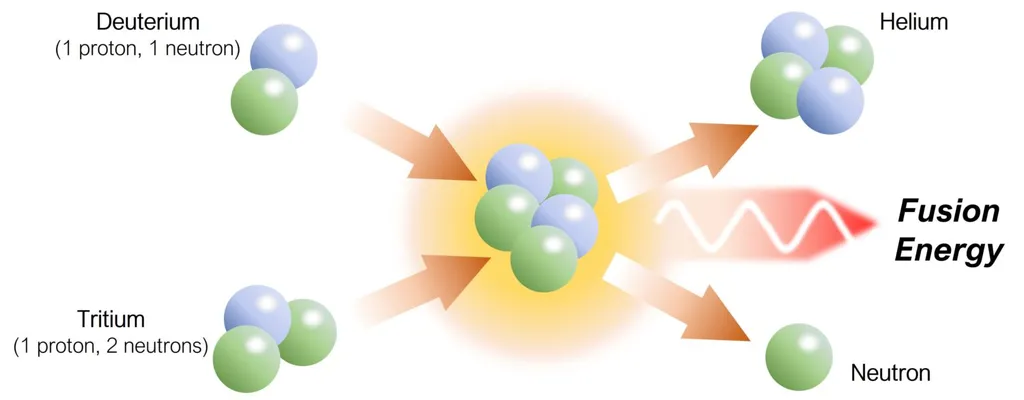
To conduct their research, the team used an active-target Time Projection Chamber (TPC) filled with CO2 gas. This advanced detection method allowed them to measure the differential and angle-integrated cross sections with high precision. The neutron beam used in the experiments was generated through the d(d,n) reaction at the Edwards Accelerator Lab at Ohio University.
The researchers compared their results with previous data at overlapping energies and angles, finding good agreement in both angular dependence and absolute cross section. Notably, their broader angular coverage revealed that the integrated cross section for the oxygen-16 reaction deviates from the evaluations in the ENDF/B-VIII.0 library, which is widely used for nuclear data. This discrepancy highlights the importance of their findings for updating and improving nuclear data evaluations.
The study also demonstrated the effectiveness of using an active-target TPC for high-quality differential cross section data across a broad angular range. This method proved to be efficient, generating good statistics even with a relatively low-intensity beam. The practical applications of this research for the energy sector include enhancing the accuracy of nuclear reactor simulations and improving the understanding of neutron transmutation processes, which can contribute to the development of more efficient and safer nuclear energy technologies.
In summary, the researchers successfully utilized an innovative detection method to gather crucial data on neutron-induced reactions with carbon and oxygen isotopes. Their findings have significant implications for the energy sector, particularly in the field of nuclear energy, where accurate nuclear data is essential for advancing reactor technology and safety. The study was published in the journal Physical Review C, providing a valuable contribution to the scientific community and the energy industry.
This article is based on research available at arXiv.